

 USD
USD EUR
EUR
 AUD
AUD
 GBP
GBP
 JPY
JPY
 INR
INR
 MXN
MXN
 CAD
CAD
 JMD
JMD
Total: $0.00
Taxes and shipping calculated at checkout


The average person is exposed to over 126 unique chemical ingredients every single day through their standard personal care routine. It's a staggering reality. This data highlights why identifying the specific skincare ingredients to avoid has evolved from a niche interest into a vital necessity for your long-term vitality. You likely feel the weight of this responsibility. The confusion caused by complex chemical names and the subtle art of greenwashing can make even a simple morning ritual feel like a minefield of hidden toxins.
We understand the desire for transparency and the deep-seated fear of endocrine disruptors or sudden reactions to hidden fragrances. You deserve a routine that feels like a mindful indulgence rather than a source of anxiety. This article promises to empower you with the knowledge to master clean beauty. We'll help you purge the harmful substances from your shelf and discover the high-integrity, holistic alternatives that honor your body's natural wisdom.
You'll walk away with a definitive blacklist of toxic ingredients based on the latest 2026 safety standards and regulatory bans. We'll also outline a serene transition plan toward premium organic skincare and high-performance supplements. It's time to cultivate a beauty ritual that radiates health from the inside out.
The journey to radiant health begins with a single, mindful choice: what we allow our skin to absorb. For decades, the beauty industry relied on cheap, synthetic preservatives to ensure products could sit on shelves for years. True vitality requires a more intentional approach. Parabens and phthalates represent a significant portion of the skincare ingredients to avoid because they don't just sit on the surface. They penetrate. They mimic. They disrupt the delicate hormonal symphony that governs everything from your mood to your skin's natural glow. This silent impact on your endocrine system can compromise long-term wellness in ways that surface-level treatments cannot fix.
Daily exposure creates a cumulative effect known as the body burden. While a single application of a lotion might seem harmless, the repetitive use of multiple products throughout the day adds up. When your cleanser, moisturizer, and serum all contain these disruptors, your system struggles to maintain its natural equilibrium. Transitioning to modern clean beauty isn't just about aesthetics. It's an act of self-worth that prioritizes your internal harmony over a product's shelf-life.
Reading a label shouldn't feel like a chore, yet many brands rely on complex terminology to obscure their formulations. Most parabens are easy to spot if you know the common prefixes: Methyl, Ethyl, Propyl, and Butyl. These compounds are highly effective at preventing microbial growth, but they do so at the cost of your hormonal health. Even if a bottle boasts a "paraben-free" sticker, it's vital to verify the full list using the International Nomenclature of Cosmetic Ingredients (INCI). This global standard ensures transparency, helping you reclaim control over your personal care ritual.
Phthalates are perhaps the most elusive toxins in your cabinet. They often act as fixatives, helping synthetic scents linger on your skin for hours. Because of trade secret laws, companies aren't required to list individual fragrance components. They simply write "Fragrance" or "Parfum" on the label. This loophole allows phthalates to remain hidden, potentially triggering respiratory issues or deep-seated skin sensitivities. You should be especially wary of products labeled as "unscented." These often contain masking agents to neutralize chemical smells, which is quite different from being truly fragrance-free. Choosing products with botanical essences ensures your skincare ingredients to avoid list stays clear of these hidden fixatives, allowing your skin to breathe and thrive in its purest state.
The ritual of cleansing should be an act of restoration. Many modern formulas turn this into a stripping process that leaves the face feeling tight and vulnerable. Identifying these skincare ingredients to avoid is the first step in restoring your skin's innate resilience. While much attention is paid to preservatives, and the FDA review of published studies on the safety of parabens offers deep insight into that category, the physical damage caused by harsh surfactants and volatile alcohols is often more immediate and profound. True purity doesn't require your skin to feel "squeaky" clean; it requires a balance that respects your natural biology.
The "matte trap" is a seductive illusion. We've been conditioned to believe that a shine-free finish is the hallmark of healthy skin. In reality, volatile alcohols like Ethanol and Isopropyl work by dissolving the very lipids that keep your skin plump and hydrated. This immediate oil control comes at a steep price. When you strip away these natural oils, your skin enters a state of panic and overproduces sebum to compensate. This creates a frustrating cycle of oiliness and breakouts. These alcohols also dehydrate cells, which can accelerate the appearance of fine lines and dullness. You'll often find them hidden in toners or lightweight sunscreens designed for a "weightless" feel. Look for fatty alcohols instead, such as Cetyl or Stearyl, which actually help to condition and soften the skin.
Marketing has taught us that a thick, pillowy lather equals cleanliness. This is a myth. Sodium Lauryl Sulfate (SLS) is a powerful surfactant originally designed for industrial degreasing. When applied to the face, it compromises your skin's natural lipid barrier. This leads to chronic irritation and sensitivity. Many people struggling with perioral dermatitis find that their symptoms vanish once they remove sulfates from their routine. These synthetic surfactants also have a lasting impact beyond your bathroom mirror. They wash into our waterways and can be toxic to aquatic life. Choosing natural skincare products that utilize gentle alternatives like Coco-Glucoside ensures a deep cleanse that respects both your body and the environment. Choosing to steer clear of these skincare ingredients to avoid allows your barrier to heal, returning your complexion to its natural state of luminosity.
Empowering yourself with knowledge turns a confusing shopping trip into a serene act of self-care. When you scan a bottle, you're looking for the essence of the formula. The most effective way to identify skincare ingredients to avoid is by applying the "Rule of Five." Regulations require ingredients to be listed in descending order of concentration. This means the first five entries usually constitute the vast majority of the product. If those top spots are filled with fillers, synthetic silicones, or harsh solvents, the "soul" of the product is already compromised. True quality doesn't hide behind water and cheap bulking agents.
Beyond concentration, you must look for the hidden culprits that often lurk at the bottom of the list. Formaldehyde-releasers like DMDM hydantoin or imidazolidinyl urea are preservatives that slowly release small amounts of formaldehyde to prevent spoilage. While effective for shelf-life, they're notorious for triggering skin sensitivities and long-term health concerns. You should also learn to embrace the Latin names, known as INCI nomenclature, and translate them into plain English. For example, Butyrospermum Parkii is simply nourishing Shea Butter. Verify your products carry reputable third-party certifications. Labels like "Cruelty-free" or "Non-GMO" provide a layer of accountability that goes beyond a brand's own claims.
Greenwashing remains one of the greatest challenges for the conscious consumer. The word "natural" is often used as a marketing shield, as it lacks a strict legal definition in the cosmetics industry. In contrast, "Organic" refers to a specific set of agricultural standards. One of the biggest red flags is the "Fragrance" or "Parfum" umbrella. This single word can hide hundreds of chemicals, including phthalates in a variety of cosmetics, which are used to make scents last longer. If a brand isn't transparent about every component of its scent, it's likely hiding skincare ingredients to avoid.
You should also question "clinical strength" claims that lack ingredient transparency. These terms are often used to justify higher prices without providing the pure, bioavailable ingredients your skin actually needs. Finally, consider the integrity of the manufacturing process. A product is only as pure as the environment where it was created. Brands like Yahreah Skin prioritize safety by utilizing FDA-registered manufacturing facilities within the USA. This ensures that every bottle meets rigorous quality control standards that aren't always guaranteed with overseas production. Choosing brands that combine high-integrity sourcing with transparent manufacturing is the ultimate way to ensure your beauty ritual supports your total well-being.
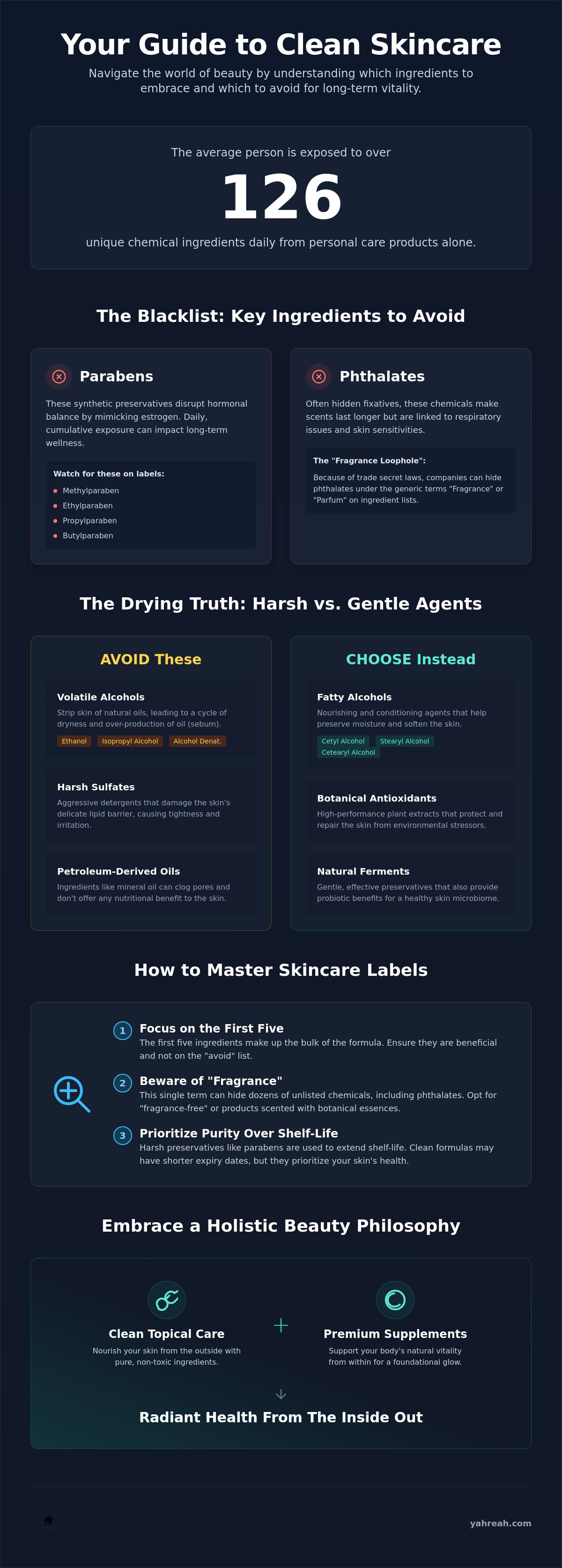
Moving away from the long list of skincare ingredients to avoid isn't about deprivation. It's an intentional upgrade to a higher standard of purity. When you remove petroleum-derived mineral oils, you make room for nutrient-dense botanical oils that actually feed your skin. Mineral oils create a plastic-like film that can trap heat and clog pores. In contrast, cold-pressed jojoba or rosehip oils mimic your skin's natural sebum. These oils provide bioavailable fatty acids that support a healthy, vibrant glow without the heavy, suffocating feel of synthetics.
Hydration is another area where nature excels. Natural humectants like plant-derived glycerin and hyaluronic acid draw moisture deep into the skin without the need for synthetic silicones. These pure alternatives ensure your barrier remains resilient and plump. To truly maximize these benefits, it's helpful to build inside-out clean beauty routines. This holistic approach recognizes that topical care is only half the story. Nourishing your body from within with bioavailable nutrients creates a foundation for lasting radiance that no chemical filler can replicate.
The fear that clean products spoil quickly is a relic of the past. In 2026, we utilize potent plant-based antioxidants like Vitamin E (Tocopherol) and Rosemary Extract to maintain formula integrity. These ingredients don't just protect the product; they provide additional anti-inflammatory benefits to your skin. We also rely on innovative airless packaging. By preventing oxygen exposure, we significantly reduce the need for harsh chemical stabilizers. Clean beauty now offers the shelf-life you expect without the toxins you've learned to reject. It's a sophisticated balance of nature and design.
Nature provides elegant solutions for every skin concern. Bakuchiol has emerged as a gold-standard alternative to traditional retinol. It offers similar age-defying results without the redness or peeling often associated with its synthetic counterpart. Similarly, Niacinamide (Vitamin B3) works naturally to strengthen your skin barrier and even out tone. By choosing cold-pressed oils and botanical actives, you ensure your routine is packed with maximum nutrient density. If you're ready to begin your journey toward a more authentic way of living, explore our collection of natural skincare products crafted with these high-integrity alternatives. Identifying skincare ingredients to avoid was your first step; choosing purity is your transformation.
True luxury is the peace of mind that comes from knowing exactly what touches your skin. Mastering your beauty ritual requires more than just a mental list of skincare ingredients to avoid. It requires a commitment to a higher standard of integrity. At Yahreah, we believe that personal care is an act of mindful indulgence. We've replaced the high-pressure tactics of the industry with a serene, empowering approach to wellness. Our standards aren't just about what we leave out; they're about the pure, bioavailable vitality we put in.
We choose to formulate our products in FDA-registered facilities within the USA. This isn't just a logistical choice. It's a promise of safety and efficacy that ensures every drop meets the highest quality control standards. By maintaining this level of oversight, we bridge the gap between aspirational beauty and grounded, scientific results. You shouldn't have to choose between a premium experience and your long-term health. Luxury is clarity.
Transparency is the cornerstone of our philosophy. We've curated a definitive list of exclusions that we call 'The Dirty List,' ensuring that endocrine disruptors and harsh synthetics never find their way into your vanity. Our small-batch approach allows us to maintain a level of precision that mass-produced brands simply cannot match. This ensures maximum potency and freshness in every formulation. We source our ingredients ethically and sustainably, prioritizing the health of the planet alongside your own. We align ourselves with the most rigorous cruelty-free skincare brands standards. Our pursuit of beauty is always kind, ethical, and intentional. Every choice we make is designed to support your transformative journey toward a more authentic way of living.
Your skin is a mirror. It reflects your internal wellness, your nutritional support, and your state of mind. We don't view skincare as a series of isolated steps. Instead, we see it as a holistic ritual that begins from within. This inside-out philosophy is why we integrate topical care with high-performance nutrition. Consulting our guide to premium women's health supplements allows you to address the root causes of dullness or sensitivity. When you nourish your body with bioavailable vitamins and minerals, your topical products can work more effectively.
You're invited to join our community of Conscientious Visionaries. This is a space for those who value simplicity, honesty, and total well-being. Take the first step toward a more vibrant version of yourself by choosing a routine that honors your body's natural wisdom. Your journey to radiant health is a path we're honored to walk with you. It's time to move beyond the label and embrace a lifestyle of pure, intentional beauty.
Your journey to pristine skin health is a profound act of self-care. By mastering the nuances of label reading and identifying the specific skincare ingredients to avoid, you've reclaimed control over your body's hormonal harmony. You now possess the tools to distinguish between stripping synthetics and the botanical actives that truly nourish your cells. This transition isn't merely about changing products. It's about adopting a lifestyle that values transparency and integrity. Luxury is clarity.
We invite you to elevate your daily ritual with formulations that honor your natural wisdom. Our commitment to excellence is reflected in our FDA-registered USA manufacturing and Red Dot level product design. Every bottle represents our dedication to 100% cruelty-free and clean formulations. We bridge the gap between sophisticated aesthetics and grounded health. It's time to indulge in a routine that feels as good as it looks. Discover the Purity of Yahreah Natural Skincare and begin your transformation today. You deserve a glow that originates from deep within.
Sensitive skin thrives when you eliminate synthetic fragrances, Sodium Lauryl Sulfate (SLS), and volatile alcohols like Ethanol or Isopropyl. These are the primary skincare ingredients to avoid if you experience frequent redness, stinging, or a tight, uncomfortable sensation. Instead, choose soothing botanical extracts and fatty alcohols that nourish and reinforce your skin's delicate moisture barrier.
Yes, certain chemicals can penetrate the skin and mimic your body's natural hormones. Parabens and phthalates are known endocrine disruptors that may interfere with your hormonal symphony and long-term vitality. Transitioning to clean, bioavailable formulas manufactured in FDA-registered facilities helps you maintain your internal balance and support your body's natural wisdom.
A truly clean brand prioritizes total transparency and refuses to hide behind vague marketing terms. Greenwashing often involves using the word "natural" without providing a full ingredient list or third-party certifications like Cruelty-Free or Non-GMO. Look for brands that clearly explain their sourcing and manufacturing standards rather than those that rely on "clinical" claims without ingredient clarity.
While some parabens are more strictly regulated than others, the most intentional approach is to avoid the entire chemical family. Methyl-, Ethyl-, and Propyl-parabens all contribute to a cumulative body burden through daily exposure across multiple products. Choosing paraben-free alternatives ensures you aren't compromising your long-term health for the sake of an artificially extended shelf-life.
Synthetic fragrances often contain hidden phthalates used as fixatives to make the scent linger on your skin. Even if you don't have immediate allergies, these chemicals can cause silent irritation and disrupt your endocrine system over time. Opting for products scented with pure botanical essences provides a sophisticated sensory experience without the hidden toxic load of synthetic perfumes.
"Natural" is a broad marketing term that lacks a strict legal definition, whereas "Organic" refers to a regulated agricultural standard. Organic skincare brands use ingredients grown without synthetic pesticides, herbicides, or GMOs. Choosing organic ensures a higher level of purity and environmental responsibility, providing your skin with the highest quality nutrients available.
Pregnant women should generally avoid retinoids, high concentrations of salicylic acid, and phthalates. These substances can be absorbed into the bloodstream and may pose risks during fetal development. It's best to shift toward a simplified, botanical routine that focuses on hydration and gentle plant-based actives to ensure safety for both you and your baby.
Your skin typically requires about 28 days to fully adjust to a clean routine, which matches the natural cycle of skin cell renewal. You might notice a brief purging period in the first week as your pores clear of residual synthetics. This is followed by a visible increase in clarity and a more radiant, healthy glow as your skin returns to its natural state of equilibrium.


