

 USD
 EUR
 AUD
 GBP
 JPY
 INR
 MXN
 CAD
 JMD
Total: $0.00
Taxes and shipping calculated at checkout


A cica soothing serum for facial redness is formulated to soothe skin and ease feelings of irritation. Cica, also known as Centella asiatica, and allantoin are commonly found in calming formulas. Because redness can have different causes, a serum may support a gentle skincare routine without addressing every underlying trigger.
It’s understandable to want your skin to feel comfortable and look calmer when it feels unsettled. This article explains what calming serums do, what can contribute to facial redness, and how formulas with cica or allantoin may soothe skin. You’ll also learn what to look for in a serum and how to introduce one thoughtfully into your routine.
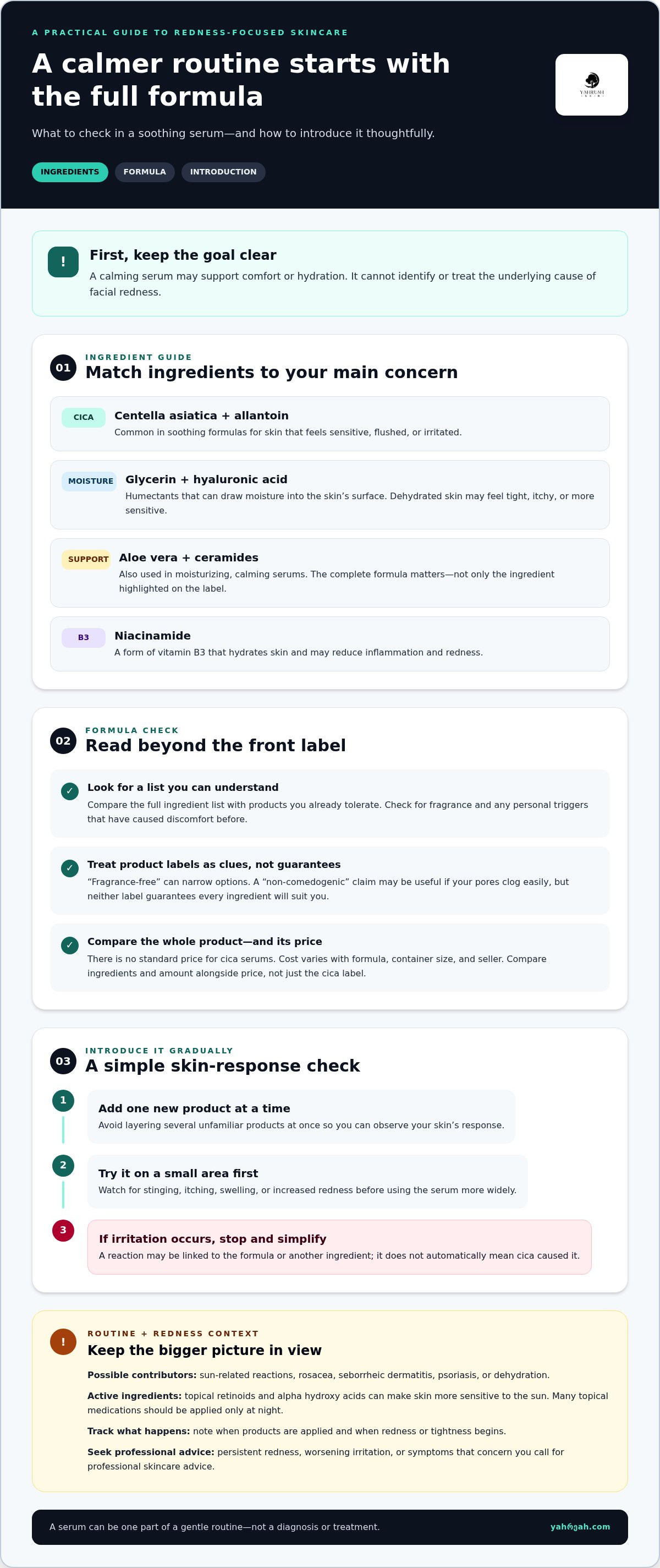
Centella asiatica, often called cica, is a botanical ingredient used in skincare for easily unsettled complexions. A cica soothing serum for facial redness may also contain allantoin, an ingredient found in soothing formulas. Together, these ingredients can be part of a gentle routine for skin that feels sensitive, looks flushed, or becomes irritated after cleansing. The full formula matters too, since its other ingredients affect how it feels on your skin.
If your skin is sensitive or irritated, introduce a new serum gradually instead of layering several unfamiliar products at once. Apply it to a small area first and watch for stinging, itching, swelling, or increased redness before using it more widely. These reactions may mean the formula, or another ingredient in it, does not suit your skin. If irritation occurs, stop using the serum and simplify your routine. This helps you identify a possible trigger without assuming cica itself caused the reaction.
How much do cica soothing serums cost? There’s no standard price: cost varies with the formula, container size, and seller. To compare products, consider the ingredients and amount alongside the price, rather than judging a serum by its cica label alone.
Niacinamide, a form of vitamin B3, hydrates skin and may reduce inflammation and redness. A formula combining niacinamide with cica or allantoin may suit someone seeking both hydration and a soothing step. Acne-prone skin can also feel dry or irritated, especially when a routine includes active ingredients. Choose a texture that feels comfortable, introduce one new product at a time, and avoid assuming that a calming serum treats acne itself.
What are the side effects or risks of cica serum for sensitive skin? A serum may cause irritation or an unwanted skin reaction, especially if another ingredient doesn’t suit you. Testing it on a small area and introducing it gradually can help reveal sensitivity before regular use.
Redness can have different causes, including rosacea, seborrheic dermatitis, and psoriasis. A cosmetic serum may support skin comfort, but it doesn’t identify or treat the cause. For persistent redness, worsening irritation, or symptoms that concern you, seek professional skincare advice. The National Rosacea Society advises people with rosacea to consult a healthcare provider about whether an over-the-counter product bearing its Seal of Acceptance could interfere with prescribed medication or therapy. Knowing your ingredients and keeping your routine measured can help, but the cause of redness guides what to do next.
Facial redness can follow sunburn or other sun-related reactions, particularly on exposed skin such as the face. Rosacea, seborrheic dermatitis, and psoriasis can also cause dry, red, irritated skin. These conditions call for different responses, so an ingredient list alone can’t explain why redness appears. Notice where it occurs, how your skin feels, and whether a new product or sun exposure came first.
Dehydration is another possible source of discomfort. It can affect any skin type, including oily skin, and may leave skin feeling tight, itchy, and more sensitive. A serum with humectants such as glycerin or hyaluronic acid can draw moisture into the skin’s surface. Aloe vera and ceramides are also used in moisturizing, calming serums. Review the complete formula, not just the ingredient highlighted on the front label.
If your skin is sensitive, start with a short ingredient list you can understand and compare with products you already tolerate. Check the full list for fragrance and personal triggers, including ingredients that have caused discomfort before. A fragrance-free label can narrow your options, while a non-comedogenic claim may be useful if your pores clog easily. Neither label guarantees that every ingredient will suit your skin, so introduce one new serum at a time.
Pay close attention to active ingredients. Topical retinoids and alpha hydroxy acids can make skin more sensitive to the sun; many topical medications should be applied only at night. If your routine includes one of these, avoid adding several new active ingredients at once. Note when you apply each product and when redness or tightness begins. This simple record can help distinguish a reaction to a new serum from irritation linked to another step in your routine.
A balanced formula matters more than a long list of soothing claims. For example, a serum with glycerin and ceramides may suit someone focused on moisture, while one with multiple active ingredients may complicate a sensitive routine. Choose according to your main concern, whether it’s tightness, visible redness, or pores that tend to clog. Cleanse gently and introduce the serum gradually so you can observe your skin’s response.
If facial redness persists or becomes more uncomfortable, the possible causes above make professional skincare advice a sensible next step. A serum can be one part of a routine, not a diagnosis or treatment for rosacea, seborrheic dermatitis, or psoriasis. For a simpler routine, explore natural skincare products and compare their ingredient lists with your skin’s needs.
A calming serum is a lightweight skincare product designed to support comfort, hydration, or both. Its thinner texture makes it easy to layer beneath moisturizer, while its ingredients shape its purpose. A formula with humectants, for example, focuses on attracting water; one containing Centella asiatica takes a soothing approach. “Calming” describes a product’s intended role, not a diagnosis or treatment for a skin condition.
The skin barrier is the outer layer that helps limit moisture loss and buffer everyday contact with the environment. When it feels compromised, skin can become dry, tight, or more reactive to products. A serum can add hydration, but it’s just one part of a routine. Gentle cleansing followed by moisturizer, for example, keeps the routine focused instead of relying on a single product.
Centella asiatica, also called cica, is used in skincare formulas for sensitive-feeling skin. A serum containing its extract can be a soothing step, while moisturizer helps ease the feeling of dryness. Read the full ingredient list: the overall formula, not one botanical ingredient, determines what else comes into contact with your skin. Introduce the serum separately from other new products so you can observe how your routine feels.
Some formulas also contain a marine prebiotic. In skincare, this ingredient is positioned to support the skin’s surface balance and complement hydration-focused ingredients, not replace them. The term “prebiotic” may sound technical, so review the product’s ingredient list and directions to understand its role in the formula. Pairing a marine prebiotic with moisturizing ingredients may suit a routine focused on keeping the skin surface comfortable and hydrated.
Choose a serum based on what you want it to do. For example, someone concerned about tight-feeling skin might prioritize hydration, while someone looking for a soothing step may seek out Centella asiatica. If your routine already includes several active products, add one serum at a time to make changes easier to notice. Keep your morning or evening routine simple: cleanse gently, apply serum as directed, then moisturize.
Calming serums don’t all work the same way, and “barrier support” can refer to different ingredient combinations. Compare the formula, texture, and directions instead of relying on a single front-label claim. If an ingredient has bothered your skin before, avoid it and test a new formula on a small area first. These practical steps help you choose a serum thoughtfully, without treating it as a substitute for care addressing persistent skin concerns.
A calming serum may support skin comfort with hydration and a gentle-feeling formula. Ingredients such as glycerin moisturize, while Centella asiatica is used in soothing skincare. Since these ingredients work differently, review the full formula rather than relying on one highlighted extract. If redness comes with tightness, a hydrating serum may help ease that discomfort as part of a broader routine.
Can cica serum help with redness from rosacea, irritation, or a damaged skin barrier? It may provide a soothing skincare step, but it doesn’t diagnose or treat rosacea or explain the cause of irritation. Rosacea, seborrheic dermatitis, and psoriasis can all involve red, irritated skin, so persistent symptoms need more than a cosmetic serum.
For a measured routine, introduce one serum at a time and notice how your skin feels after applying it. Testing a small area can help you spot irritation before applying the product across your face. Avoid adding several unfamiliar products together, which makes it harder to identify the formula that affected your skin. If redness intensifies after application, stop using the serum.
Layering matters too. Apply skincare in a deliberate order, and don’t rub or scrub areas that are already irritated. If your routine includes topical retinoids or alpha hydroxy acids, remember that these can make skin more sensitive to the sun. Many topical medications should be applied only at night, so follow each product’s directions instead of changing its timing to accommodate a serum.
Sun exposure can cause facial redness, especially on exposed areas such as the face. A soothing serum doesn’t replace sun protection; include sunscreen with SPF 30 or higher in a daily morning routine. Dehydrated skin can occur even with oily skin, and may feel tight, itchy, or more sensitive. In that situation, a moisturizer alongside a serum can help address dryness without assuming it is the sole cause of redness.
“Instantly” may sound tempting, but don’t treat a serum as an immediate fix for every flush. A formula may feel comfortable on application, but redness related to sun damage or a skin condition has a different cause. Track when redness appears, such as after sun exposure or a new product, and choose care according to that pattern. A cica serum can complement gentle skincare, not replace care for persistent or worsening symptoms.
A redness-focused serum is best judged by its ingredients, texture, and role in your routine. Hydrating ingredients such as glycerin can help address surface dryness, while Centella asiatica is used in soothing skincare formulas. Some redness-focused formulas also use 100% natural pearly particles with a green sheen intended to help counterbalance redness. That visual effect can soften the look of redness, but it doesn’t explain or treat its underlying cause.
When comparing serums and creams, consider their texture and purpose. A serum is typically lightweight and easy to layer; a cream generally provides a richer moisturizing step. Both can contain Centella asiatica, so the ingredient name alone doesn’t determine which texture suits your skin. Someone who dislikes a heavier feel, for example, might prefer a serum beneath moisturizer, while someone with dry-feeling skin may prefer a cream. Other redness treatments address different needs and aren’t interchangeable with cosmetic skincare.
How do cica serums compare with centella creams and other redness treatments? Both serums and creams can contain Centella asiatica; the main practical difference is often texture and how each fits into a routine. Cosmetic products support skincare, while addressing a skin condition requires a different approach.
Before choosing a formula, read the complete ingredient list, including fragrance and active ingredients. If fragrance has bothered your skin, a fragrance-free option can help you avoid that ingredient category. Introduce only one new serum at a time and apply it to a small area first. This makes it easier to notice whether the formula feels comfortable or causes irritation. Avoid adding several new active ingredients at once, especially if your skin already feels sensitive.
Keep the rest of your routine simple. Wash with lukewarm rather than hot water, apply skincare gently, and use sunscreen with SPF 30 or higher as part of your morning routine. Topical retinoids and alpha hydroxy acids can increase sun sensitivity, so sunscreen remains relevant even when a soothing serum is included. A serum cannot replace sun protection or care for an underlying skin condition.
Choose based on your main concern: hydration, a lighter layer, or the appearance of redness. If redness persists or worsens, a cosmetic serum isn’t a substitute for professional advice. For a considered routine, explore gentle skincare options and compare each formula’s ingredients with your skin’s needs.
Yahreah Skin offers natural skincare products for people who want to make thoughtful skincare part of their daily routine. With an understanding of how calming formulas may support skin comfort, explore skincare options while keeping ingredients and a gentle approach in mind. The brand also offers women’s health supplements, men’s health supplements, and premium supplements for broader wellness interests. These products serve different personal care needs, but supplements aren’t a substitute for skincare or professional advice about persistent facial redness.
Choose products based on your needs and the role they play in your routine. For redness-focused skincare, review the formula and follow its directions. Visit yahreah.com to explore Yahreah Skin’s offerings.
Your routine doesn’t need to grow more complicated to feel more intentional. Choose products according to your skin’s needs, introduce changes gradually, and give yourself time to notice how each step feels. A cica soothing serum for facial redness can be one considered part of your routine, alongside everyday habits that support your skincare.
For ongoing or worsening redness, make professional guidance your next step rather than relying on cosmetic products alone. For everyday self-care, Yahreah Skin offers natural skincare products, as well as women’s health supplements, men’s health supplements, and premium supplements. Explore the options at your own pace and choose what fits your personal care priorities.
Explore Yahreah Skin’s offerings and take a calm, considered step toward a routine that feels right for you.
Calming serums are leave-on skincare products formulated to support a soothing, moisturizing routine. Their role depends on the formula: one may focus on hydration, while another includes ingredients such as Centella asiatica or allantoin. For example, if cleansing leaves your face feeling tight, a serum can add a lightweight step before moisturizer. “Calming” describes the product’s intended skincare role, not a treatment for a diagnosed skin condition.
Facial redness can follow sunburn or other sun-related reactions, and conditions such as rosacea, seborrheic dermatitis, and psoriasis can cause red, irritated skin. Dehydration may also leave skin feeling tight, itchy, and more sensitive, even if it’s oily. Consider the timing and context: redness after sun exposure differs from irritation that begins after introducing a new product. These clues can help you decide whether to simplify your routine or seek professional advice.
Cica skincare may appeal to people whose skin feels sensitive or irritated, or looks red, because it’s used in soothing formulas. Dehydration can affect every skin type, including oily skin, so someone with an oily complexion may still prefer a hydrating serum. Focus on the full formula and its texture, not just the cica label. Introduce a new product separately so you can notice how your skin responds.
Cica is a common skincare name for Centella asiatica, a botanical ingredient used in formulas intended to soothe skin. A cica serum may be a gentle-feeling step for a red or irritated complexion. It doesn’t explain why redness is happening or address every possible cause. For example, redness linked to rosacea or a sun-related reaction calls for attention to its cause, not reliance on a cosmetic ingredient alone.
Look for Centella asiatica alongside moisturizing ingredients such as glycerin, hyaluronic acid, aloe vera, or ceramides. Niacinamide, a form of vitamin B3, hydrates skin and may reduce inflammation and redness. Check the full ingredient list, especially if you’ve reacted to fragrance or another ingredient before. If you use topical retinoids or alpha hydroxy acids, consider how a new serum fits with those active ingredients and your existing routine.
The right choice depends on your skin’s needs and the formula, not just the cica name. Compare full ingredient lists, fragrance information, texture, and directions, and introduce one new serum at a time. The National Rosacea Society Seal of Acceptance reflects an independent dermatologists’ panel evaluation of ingredients generally unsuitable for sensitive rosacea skin. The Society says the seal doesn’t guarantee improvement and advises consulting a healthcare provider about interactions with prescribed medication or therapy.
Apply a pea-sized amount to clean, dry skin, gently massaging it over the face. Product directions recommend daily use in the morning and evening, after washing and before treatment cream, moisturizer, and sunscreen. In the morning, include sunscreen with SPF 30 or higher. Use lukewarm rather than hot water when washing sensitive facial skin. If you’re adding the serum to an established routine, introduce it on its own first.


