

 USD
USD EUR
EUR
 AUD
AUD
 GBP
GBP
 JPY
JPY
 INR
INR
 MXN
MXN
 CAD
CAD
 JMD
JMD
Total: $0.00
Taxes and shipping calculated at checkout


What if the secret to a truly transformative glow isn't just the serum you choose, but the precise moment it touches your skin? Many of us have stood before the mirror, feeling the quiet frustration of a complex routine. You might worry about ingredients losing their potency or feel the familiar fear of irritation from layering too many actives at once. It is a vital question to ask: when should i use vitamin c in my skin care routine to actually see a difference?
You deserve a ritual that feels like a mindful indulgence rather than a confusing chore. We're here to bridge the gap between clinical science and serene self-care. This guide reveals the precise timing for Vitamin C application to maximize your antioxidant shield, ignite collagen production, and achieve a luminous clarity that feels both natural and high-end. We will explore the rhythm of your skin's circadian clock, the power of liposomal synergy from the inside out, and the 2026 standards for layering your favorites. Prepare to replace uncertainty with a clear, rhythmic path to your most vital complexion yet. It's time to embrace a more intentional way of living.
Vitamin C is far more than a passing trend in the beauty world; it's a fundamental nutrient for skin vitality. As a potent antioxidant, it serves as a guardian for your complexion, preserving its youthful bounce and clarity. To truly harness its power, we must respect the biological functions of vitamin C, particularly its role as a necessary cofactor for collagen synthesis and its ability to neutralize oxidative stress. Many enthusiasts find themselves asking, when should i use vitamin c in my skin care routine to see the most transformative results? The answer involves a graceful balance between daytime protection and nighttime correction.
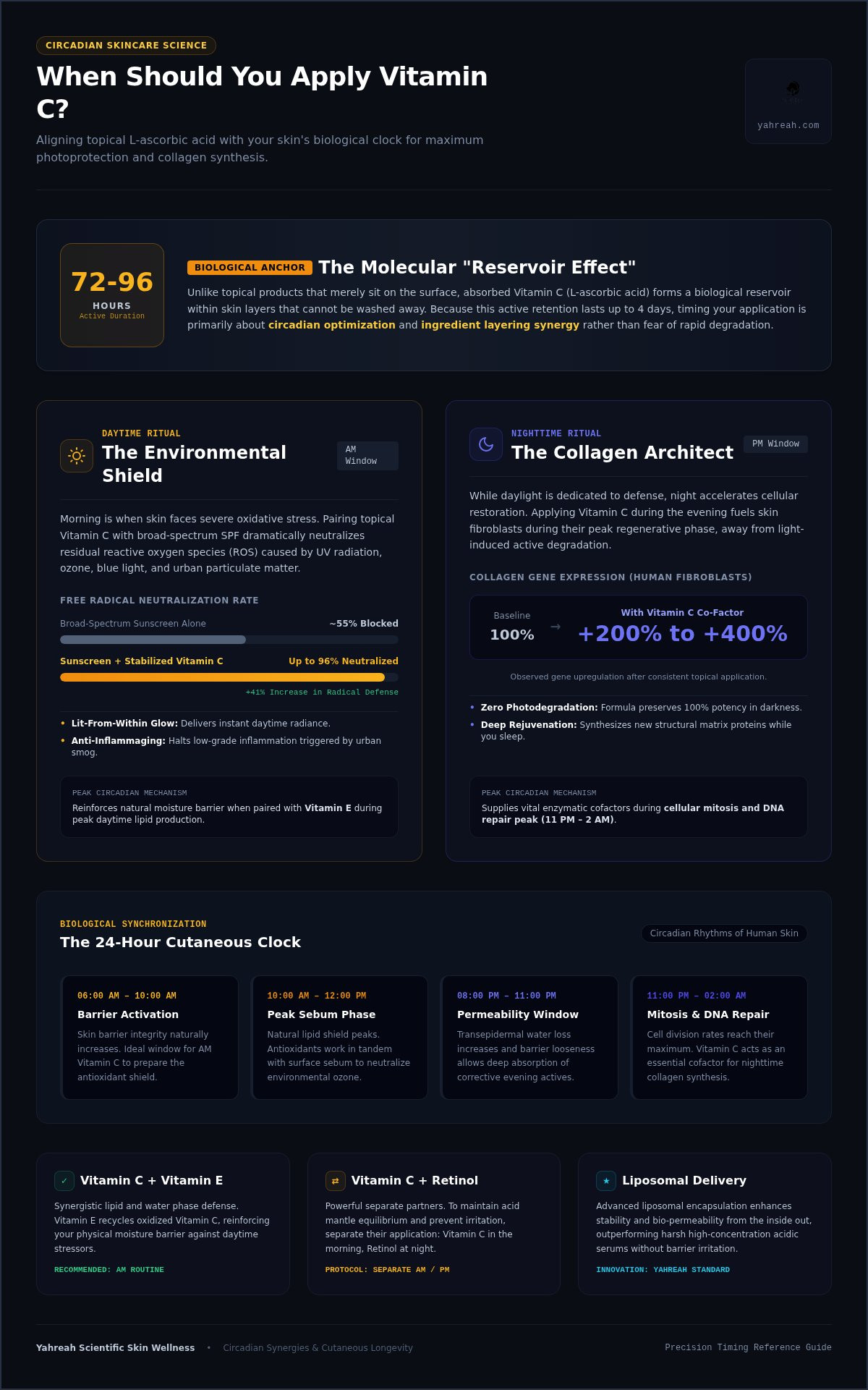
One of the most fascinating aspects of this molecule is the "reservoir effect." Unlike some topical treatments that sit on the surface, L-ascorbic acid creates a biological storage within the skin layers. Research confirms that once Vitamin C is absorbed, it remains active for up to 72 to 96 hours. It doesn't simply wash away. This longevity gives you flexibility, yet choosing an intentional time for application helps you avoid ingredient conflicts and ensures your skin remains calm and receptive. It's about creating a rhythm that honors your skin's natural needs.
The morning hours are when your skin faces its greatest environmental challenges. UV rays, ozone, and urban pollution all trigger free radicals that can damage your cellular structure. Applying Vitamin C during your AM ritual creates a sophisticated environmental shield. While a high-quality broad-spectrum sunscreen is non-negotiable, it typically only blocks about 55% of the free radicals generated by UV exposure. When you pair your SPF with a stabilized Vitamin C serum, you can neutralize up to 96% of those residual reactive oxygen species. This synergy provides an unparalleled level of defense. Beyond protection, a morning application grants you an immediate, lit-from-within glow that carries you through the day with confidence.
While the day is for defense, the night is for restoration. Your skin's natural regenerative cycle accelerates while you sleep, making the PM window ideal for corrective care. Studies indicate that topical Vitamin C can increase collagen gene expression in human fibroblasts by 200% to 400% after consistent use. Because cellular mitosis and DNA repair peak between 11:00 PM and 2:00 AM, providing your skin with these vital cofactors during rest supports its most intensive building phase. Using Vitamin C at night also protects the formula from light-induced degradation, ensuring every drop remains potent. It turns your evening routine into an act of mindful indulgence, allowing you to wake up to a complexion that feels refreshed and deeply nourished.
Your skin is a dynamic organ that follows a precise internal clock. It doesn't just react to the world; it anticipates it. During the day, its primary goal is to shield you from the harshness of the environment. At night, it turns its attention inward to repair the day's wear. Understanding this rhythm is essential when deciding when should i use vitamin c in my skin care routine. By synchronizing your actives with these biological windows, you transform a simple routine into a sophisticated ritual of circadian synergy.
Photoprotection is the prevention of light-induced damage to the skin. Between 6:00 AM and noon, your skin barrier integrity is naturally high, and sebum production reaches its peak mid-morning, usually between 10:00 AM and 12:00 PM. This is your skin’s natural lipid shield phase. However, this is also when environmental stressors trigger oxidative stress. This invisible damage leads to "inflammaging," a process where chronic, low-grade inflammation accelerates the visible signs of aging. Common daily triggers include:
A Harvard Health analysis on topical vitamin C confirms that applying antioxidants in the morning neutralizes these free radicals before they can degrade your DNA. When you pair Vitamin C with Vitamin E, you reinforce the moisture barrier. This provides a double layer of defense that keeps your complexion calm and vital throughout the day.
When the evening arrives, your skin’s priorities shift toward renewal. Between 8:00 PM and 2:00 AM, transepidermal water loss peaks, making your skin more permeable and receptive to deep-reaching actives. This is the optimal window for Vitamin C to act as a collagen architect. During these hours, cellular mitosis, the birth of new skin cells, occurs at rates up to 3x higher than during the day. Vitamin C stabilizes the collagen molecule, ensuring that the new scaffolding being built is strong and resilient.
Applying your serum at night allows it to address hyperpigmentation and dark spots without the interference of sunlight. It's a moment of luxury, allowing potent serums to absorb fully without the weight of makeup or the rush of the morning. To elevate this restorative phase, explore our range of natural skincare products designed to work in harmony with your body’s natural wisdom. It's an act of mindful indulgence to let your skin breathe and heal while you rest.
The "Golden Rule" of a mindful skincare ritual is to never overwhelm your skin's acid mantle. This delicate, slightly acidic barrier is your first line of defense against the world. It thrives on balance. When you consider exactly when should i use vitamin c in my skin care routine, you must also consider the chemical personality of every other active in your cabinet. Modern science has evolved, allowing us to debunk old myths. For instance, we now know that Niacinamide and Vitamin C are not enemies. They are a powerful duo that targets hyperpigmentation through separate biological pathways, working in harmony to reveal a more even, vital complexion.
Using exfoliating acids like AHAs or BHAs alongside your Vitamin C requires a more cautious, gentle hand. Because both are acidic treatments, applying them in the same layer can lead to unwanted redness or a compromised barrier. A more serene approach involves alternating these treatments. Use your Vitamin C daily for its protective benefits and reserve your chemical exfoliants for two or three evenings a week. This allows your skin to reset and prevents the "purging" or irritation that often stems from over-activity.
Retinol and Vitamin C are the ultimate "roommates" of a high-end routine, but they should never be "bedmates" applied at the same moment. The American Academy of Dermatology skincare guidance suggests a clear separation for optimal results: Vitamin C for morning defense and Retinol for evening repair. This timing respects the specific pH requirements of each molecule. L-ascorbic acid requires a low pH below 3.5 to penetrate effectively, while Retinol functions best at a more neutral level. Mixing them directly can neutralize the benefits of both. To learn how to weave these powerful actives into a holistic lifestyle, explore our guide on The Conscious Glow: How to Build Your Inside-Out Clean Beauty Routine in 2026.
True vitality comes from synergy. The trio of L-ascorbic acid, Vitamin E, and Ferulic Acid is a recognized standard in skincare. These ingredients stabilize one another, significantly increasing the photoprotective benefits compared to using Vitamin C alone. To enhance absorption, apply your serum to a slightly damp face prepped with Hyaluronic Acid. This provides the deep hydration needed for the Vitamin C to reach the deeper layers of the epidermis. Finally, seal your routine with nutrient-rich plant-based oils. This final step locks in the active nutrients and turns your daily self-care into a moment of pure, intentional indulgence.
Integrating a new active into your ritual requires a gentle, steady hand. It's not about seeking the highest concentration; it's about the most consistent devotion. When you ask, when should i use vitamin c in my skin care routine, the answer begins with the preparation of your canvas. While a clean, slightly damp surface is often praised for absorption, applying pure L-ascorbic acid to dry skin helps maintain the necessary acidic pH for maximum efficacy. For those beginning this journey, we recommend the "low and slow" approach. Start with a lower concentration every other day. This allows your skin to acclimate without the shock of irritation.
Your technique matters as much as the formula itself. Instead of rubbing, which can cause micro-friction and redness, try a gentle patting motion. Use the pads of your fingers to press the serum into your skin. This mindful practice encourages deeper penetration while keeping the skin barrier serene and undisturbed. Consistency is the true bridge to transformation; a moderate daily dose provides far better results than an occasional high-concentration treatment that might overwhelm your barrier.
A structured morning ritual ensures your skin remains protected throughout the day's challenges. Follow these intentional steps:
Every complexion has a unique voice. Dry skin types often find solace in Vitamin C formulas with an oil or cream base, which provide a luxurious layer of hydration alongside antioxidant benefits. For those with oily or acne-prone skin, a water-based L-ascorbic acid or Sodium Ascorbyl Phosphate is often more effective. These lighter textures offer clarity without clogging pores. If your skin is sensitive, traditional high-acid serums might feel aggressive. This is where liposomal delivery becomes transformative. By encapsulating the molecule in a phospholipid bilayer, the Vitamin C bypasses surface irritation and reaches the cells that need it most. To find the perfect match for your unique needs, explore our collection of natural skincare products and start your journey toward a more luminous tomorrow.
Excellence in skincare isn't measured by the intensity of the sting, but by the purity of the result. At Yahreah, we view personal care as an act of mindful indulgence. While many brands focus solely on high percentages of L-ascorbic acid, we prioritize stability and cellular harmony. A formula that oxidizes on your shelf or causes surface-level irritation is a step away from the serenity your skin deserves. Stability is king. When you decide when should i use vitamin c in my skin care routine, choosing a stable format ensures that the nutrients you apply are actually active and ready to transform your complexion.
Our philosophy is rooted in the belief that beauty should be a transformative journey rather than a chore. We move away from the high-pressure tactics of the industry to offer a voice that is both premium and deeply trustworthy. By focusing on clean, ethical formulations, we empower you to view your routine as a moment of tranquility. It's about more than just surface-level brightness; it's about a total sense of self-worth and well-being.
A liposomal delivery system is a microscopic fatty sphere that encapsulates and protects the active ingredient from degradation. This innovation is a cornerstone of The Power of Liposomal Technology: A Reference Guide to Enhanced Vitality. By shielding the molecule in a phospholipid bilayer, we ensure it remains potent until the moment it reaches your cells. This technology significantly reduces the risk of oxidation and surface irritation. It allows for enhanced absorption that traditional, water-soluble serums often lack. When you consider when should i use vitamin c in my skin care routine, choosing a stable, liposomal format means you can apply it with confidence, knowing the nutrients are truly active and bioavailable.
True vitality is a journey that starts from within. While topical application creates a vital environmental shield, pairing your routine with Vitamin C-rich supplements provides a total wellness transformation. This "inside-out" approach ensures your dermal tissue is saturated with the cofactors needed for collagen synthesis from the vascular level. Our commitment to integrity means every product is part of a larger vision for The Purity of Nature: A 2026 Guide to Natural Skincare Products. We maintain high standards through USA-made, FDA-registered production, giving you peace of mind with every drop. Empowering your skin journey requires transparency and clean ingredients. By choosing a holistic path, you are not just treating a symptom; you are honoring your body's natural wisdom and its capacity for renewal.
Your journey toward a more radiant complexion is a path of both science and soul. We have explored how the natural rhythm of your day dictates when should i use vitamin c in my skin care routine; it's a choice between daytime defense as an environmental shield and nighttime architectural repair. By prioritizing formula stability and the gentle power of liposomal innovation, you ensure your skin receives the nourishment it deserves without the risk of irritation. This holistic approach transforms a simple ritual into an act of mindful indulgence.
At Yahreah, we remain committed to the highest standards of integrity and transparency. Our FDA-registered manufacturing in the USA and cruelty-free formulations reflect a bold spirit of global responsibility. We invite you to step away from high-pressure tactics and embrace our premium clean beauty standards. It's time to align your external care with your internal well-being. Discover the Purity of Yahreah Skin Care and begin your transformative journey today. Your most vital skin is waiting to be revealed.
It is best to separate these powerful actives to respect their unique pH environments. While Vitamin C thrives in the morning to defend against environmental stress, Retinol acts as a nighttime architect for cellular renewal. Using them together in a single layer can lead to unwanted irritation or neutralized efficacy. We recommend a rhythmic approach that honors your skin’s natural cycle of protection by day and repair by night.
Allow your serum to absorb for approximately one to two minutes before moving to the next step in your ritual. This brief pause ensures the active L-ascorbic acid has sufficient time to penetrate the skin barrier and begin its vital work. Once the surface feels dry to the touch, you can apply your moisturizer to seal in the nutrients and maintain a supple, hydrated complexion throughout the day.
Vitamin C does not increase sun sensitivity; instead, it acts as a vital partner to your daily SPF. By neutralizing free radicals generated by UV exposure, it provides a second layer of defense that sunscreen alone cannot offer. However, because it is an active ingredient that encourages renewal, you should always follow with a broad-spectrum sunscreen to ensure your skin remains calm and fully protected from light-induced damage.
A potent and effective Vitamin C serum should ideally be clear or a very pale champagne hue. If you notice your product has turned a dark amber, orange, or deep brown, it has likely oxidized and lost its biological vitality. Using an oxidized serum can cause surface irritation and will not provide the luminous results you seek. Always store your bottles in a cool, dark place to preserve their purity.
You can certainly enjoy the benefits of this antioxidant even with a delicate complexion. The key is choosing a stabilized, liposomal delivery system that bypasses the surface stinging often associated with traditional high-acid formulas. These advanced lipid-wrapped molecules reach deeper layers without disrupting your outer barrier. Start slowly, applying the serum every other day to allow your skin to find its natural balance and a healthy, serene glow.
Using Vitamin C twice daily is safe, but it is often unnecessary due to the skin’s unique reservoir effect. Once absorbed, the nutrient remains active within your skin for up to 72 hours. For most individuals, a single morning application provides ample protection and renewal. If you are wondering when should i use vitamin c in my skin care routine for the best results, a consistent daily AM ritual is the gold standard.
Vitamin C should be applied directly after cleansing and toning while your skin is fresh and receptive. Because it is a concentrated treatment, it needs to be closest to the skin to penetrate effectively. Once the serum has settled, follow with your favorite hydrating layers and a protective SPF. This sequencing ensures that the active molecules can perform their work without being blocked by heavier creams or facial oils.
Using expired or oxidized Vitamin C can lead to skin irritation, localized breakouts, or a temporary yellowing of the skin surface. Beyond the physical discomfort, the serum will no longer provide the antioxidant protection or collagen support you desire. To maintain the integrity of your ritual, we recommend replacing your serum every three to six months. This ensures you are always feeding your skin the highest quality and most potent nutrients.


