

 USD
 EUR
 AUD
 GBP
 JPY
 INR
 MXN
 CAD
 JMD
Total: $0.00
Taxes and shipping calculated at checkout


A supplement isn’t a shortcut to stronger bones. Bone density supplements with calcium and boron may help address a dietary gap, but they shouldn’t be treated as a stand-alone way to prevent or manage osteoporosis. For most adults, the recommended dietary allowance for calcium is around 1,000 milligrams per day.
It’s understandable to look for nutrients that support bone health, especially when labels combine calcium with boron or vitamin K2. The evidence calls for a thoughtful approach: calcium intake matters, while the role of boron and K2 deserves careful consideration rather than big promises. This article explains what the evidence suggests about these nutrients, how they may fit into a supplement, and why it’s wise to consult a healthcare professional before starting one. That step is especially important if you’re pregnant or breastfeeding, have a health condition, or take prescription medication. A calm, informed choice starts with understanding both the potential benefits and the reasons to be cautious.
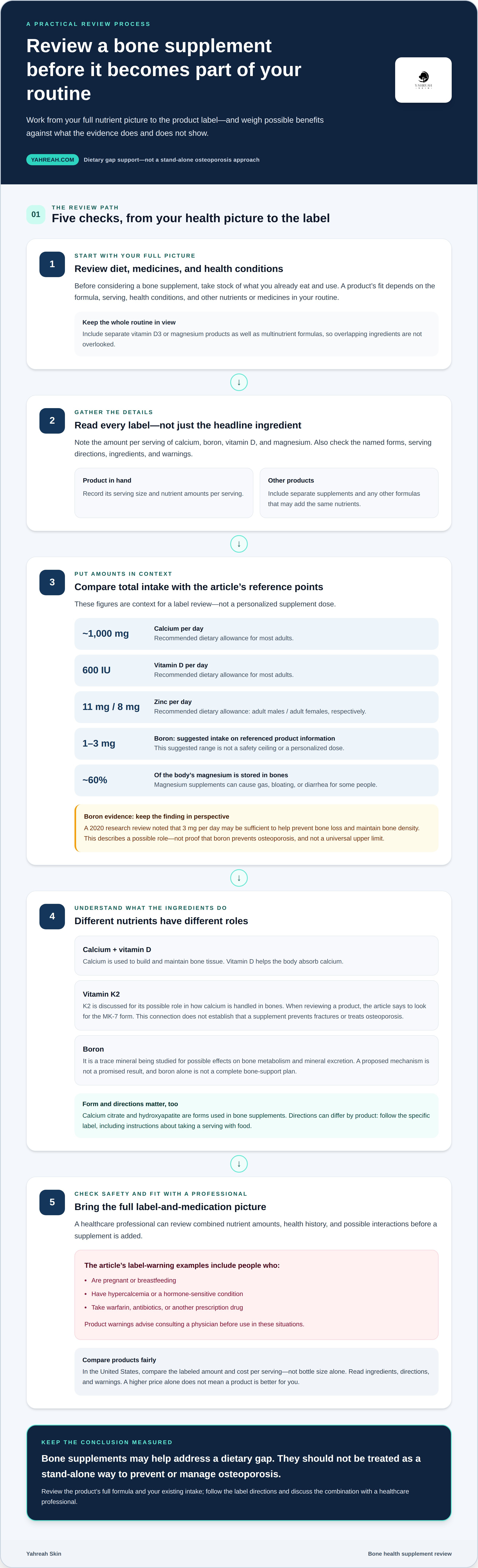
Before adding a bone supplement, review your current diet, medicines, and health conditions with a healthcare professional. Bring the product label and note the amount of calcium, boron, vitamin D, and magnesium in each serving. This makes it easier to consider the full combination rather than one ingredient alone. The National Academies of Sciences, Engineering, and Medicine sets the recommended dietary allowance for vitamin D at 600 IU per day for most adults. For zinc, its recommended dietary allowance is 11 mg daily for adult males and 8 mg daily for adult females.
Boron’s potential bone role is still being studied. A 2020 research review noted that 3 mg of boron per day may be sufficient to help prevent bone loss and maintain bone density. Vitamin D3 is another nutrient to discuss alongside calcium, since supplement plans should account for your existing intake. Magnesium also belongs in the conversation: about 60% of the body’s magnesium is stored in bones. Magnesium supplements can cause gas, bloating, or diarrhea for some people, and effects can vary.
In the United States, compare products by the labeled amount per serving and the cost per serving, rather than bottle size alone. Read the ingredients, serving directions, and warnings to assess quality and fit; a higher price alone does not mean a product is better for you. Follow the label directions, and review total nutrient amounts before combining products. This makes it easier to compare formulas fairly without assuming they all contain the same nutrients.
Risks depend on the formula, serving, health conditions, and other nutrients or medicines in your routine. Product label warnings advise people who are pregnant or breastfeeding, have hypercalcemia or a hormone-sensitive condition, or take warfarin, antibiotics, or another prescription drug to consult a physician before use. That review also helps identify possible interactions and overlapping ingredients. Bring every supplement label to the conversation, including separate vitamin D3 or magnesium products, so the professional can assess the complete list.
Calcium is a mineral used to build and maintain bone tissue, while vitamin D supports its absorption. Vitamin K2 is discussed for its possible role in how calcium is handled in bones. These nutrients have distinct roles, so a formula combining them doesn’t automatically suit every person. Look for vitamin K2 in the MK-7 form when reviewing a bone-health supplement, and compare its label with your existing nutrient intake.
Vitamin K also supports proteins involved in bone metabolism. That connection helps explain why K2 appears in some bone-health formulas, but it doesn’t establish that a supplement prevents fractures or treats osteoporosis. A useful label review focuses on the named form, the amount per serving, and the other ingredients. For example, compare a calcium-and-K2 product with a separate vitamin D supplement to identify overlap before combining them.
When comparing calcium supplements, consider the form and the label directions. Calcium citrate and hydroxyapatite are forms used in bone supplements, but instructions can differ by product. Follow the specific label rather than assuming every calcium product is taken the same way. If the label says to take a serving with food, follow that direction. If you use multiple products, discuss their combined ingredients with a healthcare professional.
Vitamin D and calcium work in tandem: vitamin D helps the body absorb calcium, while calcium supplies a mineral used in bone. Vitamin K’s role is different, so adding K2 doesn’t replace attention to calcium intake or vitamin D. For a practical review, note each product’s serving size, form, and directions, then bring the labels to a clinician or pharmacist. A considered routine can begin with thoughtful supplement choices that fit your existing plan.
Boron is a trace mineral being studied for possible effects on bone metabolism. Researchers have also examined whether it influences how the body handles minerals, including their excretion. These processes matter because bone tissue depends on minerals such as calcium and phosphorus. A 2020 research review noted that 3 mg of boron per day may be sufficient to help prevent bone loss and maintain bone density. That finding is a possible role, not proof that boron supplements prevent osteoporosis.
The suggested daily intake on the referenced product information is 1-3 mg. Treat that range as a suggested intake, not as a safety ceiling or a personalized dose. The 2020 review’s 3 mg figure describes a possible amount for bone health; it doesn’t establish a universal upper limit. Review a supplement’s boron amount alongside other products and dietary sources, so the total intake isn’t considered in isolation.
Mineral excretion is one possible reason boron has drawn research interest. If boron affects how the body processes or loses minerals, that could be relevant to bone maintenance. However, the review finding concerns possible bone loss and density, not a measured change in mineral excretion. Do not treat a proposed mechanism as a promised result. Bone health also involves calcium and other nutrients, so boron alone is not a complete bone-support plan.
To review boron intake, read the amount per serving, note the number of servings recommended on the label, and add amounts from other products. A multinutrient formula and a separate boron supplement, for example, may both contribute boron. Before use, ask a healthcare professional to consider your combined intake, health history, and medicines. This is especially useful if you are pregnant or breastfeeding, have a hormone-sensitive condition, or take prescription medication.
The suggested daily intake is 1-3 mg, but that range is not a safety ceiling. The 3 mg figure discussed for bone health does not establish a universal upper limit.
Calcium is essential to bone tissue, but a supplement’s value depends partly on how much calcium your diet already provides. The recommended dietary allowance is around 1,000 milligrams per day for most adults, counting food and supplements together. That figure is a total intake target, not a recommended supplement dose. A practical first step is to consider calcium-rich foods in your regular meals, then discuss whether a supplement could help fill a dietary gap.
Evidence needs careful interpretation. A 2022 research review found that vitamin D doses above 400 IU per day did not benefit bone density in its analysis of calcium and vitamin D supplementation. This finding concerns the analysis described, not every supplement formula or person. It also cautions against assuming that adding more nutrients automatically produces a better bone-density result. A product’s calcium content, the person’s existing intake, and the outcome being studied all matter.
Supplement labels can help you compare formulas, but they should not be treated as interchangeable. Calcium citrate and hydroxyapatite are forms used in bone supplements. Check the calcium amount per serving, directions, and other listed nutrients. If a multinutrient formula already contains calcium, adding a separate calcium product could raise your total intake. Include food sources in the discussion, too, since daily recommendations apply to combined intake.
The clearest takeaway is to match supplementation to need, rather than choosing a product solely because it promises bone support. A healthcare professional can consider your diet, current supplements, and health circumstances when reviewing whether extra calcium is appropriate. If you’re exploring a supplement routine, review calcium supplement options alongside your full daily intake and professional advice.
Yahreah Skin offers supplements for women’s health, men’s health, and broader wellness. If you are considering bone-health nutrients, use the information above to guide a careful discussion with a healthcare professional before choosing or combining supplements. A professional can consider your diet, health history, and current medicines. Supplements are not a substitute for that assessment.
Approach the next step with clarity: identify the nutrients you’re already getting, note any questions about ingredients or serving directions, and explore options that align with your needs. Yahreah Skin also offers natural skincare products, alongside its supplements, for a considered approach to personal care. For questions about Yahreah Skin’s offerings, contact Yahreah Skin.
A lasting wellness routine comes from choices that fit your life, not from adding every ingredient that sounds promising. If you are considering bone density supplements with calcium and boron, pause before choosing a formula. Think about your goals, what you already take, and what questions remain after reading the label. A conversation with a healthcare professional can help you decide on a considered next step.
Keep your approach steady and personal. Explore supplement options while treating product information as one part of the decision, alongside professional advice and your broader health needs. The goal is not to create a perfect routine overnight, but to make a thoughtful choice you can revisit as your needs change.
For a next step, contact Yahreah Skin to learn about its offerings. Move forward with care, curiosity, and confidence in the choices you make.
Supplements may help fill nutrient gaps, but they are not a stand-alone way to prevent or manage osteoporosis. Consider bone density supplements with calcium and boron in the context of your diet and health needs, not as a replacement for appropriate medical care. Someone already meeting nutrient needs through food, for example, may have different considerations from someone with a dietary shortfall.
Evidence doesn’t establish calcium supplements as a guaranteed way to improve bone density. A 2022 review found that vitamin D doses above 400 IU per day did not benefit bone density in its analysis of calcium and vitamin D supplementation. This finding concerns that analysis, not every person or formula. Consider dietary intake and the supplement’s full contents when discussing whether it may be appropriate.
Boron’s possible contribution to bone health remains an area of research, rather than a proven result for every user. A 2020 research review noted that 3 mg per day may be sufficient to help prevent bone loss and maintain density. That finding doesn’t establish a guaranteed outcome or prove improved calcium retention. Consider boron as one element of a broader nutrient plan.
Calcium citrate and hydroxyapatite may be options to consider when choosing a calcium supplement. This does not establish that they rank above calcium carbonate. Compare the calcium amount and directions on each label, then account for your dietary sources. A healthcare professional can help assess which form suits your circumstances and existing supplement routine.
Consult a physician before use if you are pregnant or breastfeeding, have hypercalcemia or a hormone-sensitive condition, or take warfarin, antibiotics, or another prescription drug. Bring the labels for bone density supplements with calcium and boron, along with any other products you use. This gives the physician a clearer view of the ingredients and possible interactions before you add a supplement.
In the United States, compare products by labeled amount and cost per serving, not bottle size. Review the ingredients, serving directions, and warnings; a higher price alone does not establish better quality or fit.


