

 USD
 EUR
 AUD
 GBP
 JPY
 INR
 MXN
 CAD
 JMD
Total: $0.00
Taxes and shipping calculated at checkout


“Rosacea-prone” describes a tendency, not a certainty. In the phrase calming face wash for rosacea-prone skin, prone means more likely or susceptible to experiencing rosacea; it doesn’t mean a flare or symptom is inevitable.
If you’ve wondered whether “prone” simply means someone has rosacea, the distinction matters. The word describes a possibility or inclination, rather than confirming a diagnosis.
This article explains what prone means in this skincare context and explores clear alternatives, including susceptible to, likely to experience, and tending toward. You’ll see how each synonym shifts the nuance of “rosacea-prone skin,” making the phrase easier to understand when reading about gentle cleansing and skincare.
A humectant attracts water to the skin’s surface. Glycerin is a familiar example in cleansers, where it can help limit the tight, dry feeling some people notice after washing. An emollient softens skin by smoothing its surface. Ingredients such as squalane can make a cleanser feel less stripping, though individual responses differ.
A barrier-supporting ingredient is used to help maintain the skin’s outer protective layer. Ceramides are lipids included in skincare formulas for this purpose. A gentle cleanser may combine ceramides with glycerin instead of relying on a strong cleansing feel. Check the ingredient list, since product claims alone don’t show which ingredients a formula contains.
A short, uncomplicated ingredient list is a practical starting point for sensitive-feeling skin. Look for clear examples such as:
“Fragrance-free” means a formula is made without added fragrance ingredients. This label can help narrow your choices if scented products have bothered your skin before. It isn’t the same as “unscented,” which can describe a product containing ingredients to mask odor. Read the full ingredient list for fragrance terms, including parfum, and consider your past reactions.
Introduce a new cleanser as the only change to your routine, rather than using it alongside several new products. Apply a small amount to damp skin, rinse gently, and notice how your face feels afterward. A gentle formula should cleanse without leaving a persistent tight or uncomfortable sensation. No ingredient guarantees that everyone with rosacea will tolerate a product, so your skin’s response is useful information.
Contact details provided for wildlife refuges are separate from cleanser ingredient guidance: Bald Knob National Wildlife Refuge can be contacted at 501-724-2458 or 870-347-2614; Big Lake National Wildlife Refuge can be contacted at 870-564-2429; Cache River National Wildlife Refuge can be contacted at 870-347-2614.
A potential irritant is an ingredient that may cause discomfort for some people. Responses vary, so a label offers clues, not a diagnosis. In cleansers, fragrance, certain surfactants, and cooling additives are useful categories to review.
Sodium lauryl sulfate is a surfactant, an ingredient that helps lift oil and residue. Its strong cleansing action may leave sensitive-feeling skin dry or tight. Sodium laureth sulfate is a related cleansing agent, but formulas vary. Look for either name in the ingredient list, especially if washing tends to leave your face uncomfortable.
Denatured alcohol is alcohol altered for use in a cosmetic formula. It can create a brisk, quick-drying feel that may not suit easily irritated skin. Ingredient lists may identify it as alcohol denat. Don’t confuse it with fatty alcohols such as cetyl alcohol, which have different roles in a formula.
Fragrance is a blend of scent ingredients added to create or alter a product’s smell. Menthol and camphor are cooling ingredients that can produce a noticeable sensation on the skin. Essential oils, including peppermint or citrus oils, may also add scent. If a cleanser causes burning or persistent discomfort, look for these names on its label.
Exfoliating acids are ingredients used to loosen surface buildup. Examples include glycolic acid, lactic acid, and salicylic acid. A rinse-off cleanser containing these ingredients may feel different from a basic cleansing formula, particularly if your routine already includes exfoliating products. Avoid adding several new active ingredients at once, or it may be harder to identify what came before a reaction.
Use a simple review process:
Keeping a record can help you spot patterns without assuming every flagged ingredient affects everyone.
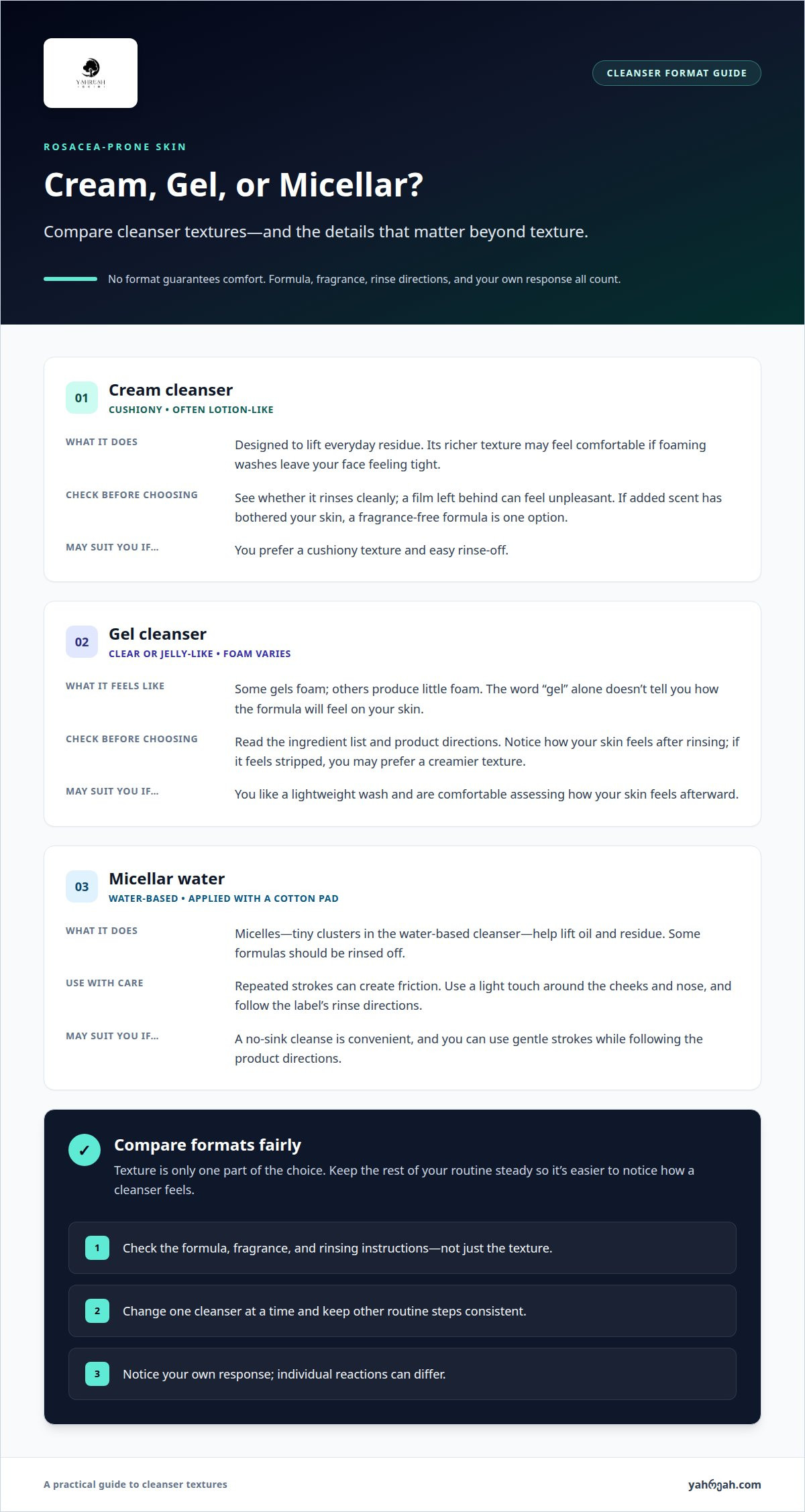
A cream cleanser is a creamy, often lotion-like wash designed to lift everyday residue. Its richer texture may feel comfortable if foaming washes leave your face tight. Check whether the formula rinses cleanly, since any film left behind can feel unpleasant. A fragrance-free cream cleanser is one option if added scent has bothered your skin before.
A gel cleanser has a clear or jelly-like texture. Some gels foam, while others produce little foam, so “gel” alone doesn’t tell you how a formula will feel. Check the ingredient list and product directions. If a gel leaves your skin feeling stripped after rinsing, you may prefer a creamier texture.
Micellar water is a water-based cleanser with micelles, tiny clusters that help lift oil and residue. It’s usually applied with a cotton pad, though some formulas should be rinsed off. Repeated strokes can create friction, so use a light touch around the cheeks and nose. Follow the label, especially if it says to rinse.
Texture is only one factor when choosing a cleanser for rosacea-prone skin. Formula, fragrance, rinsing instructions, and your own response all matter. Compare formats by changing one product at a time and keeping other routine steps steady. This makes it easier to notice whether a cream, gel, or micellar formula feels more comfortable.
Whichever format you choose, use lukewarm water and your fingertips rather than a rough cloth. Pat your face dry with a clean towel instead of rubbing. These simple steps help reduce unnecessary friction while you find a cleanser texture that feels comfortable in your routine.
A typical price is the amount commonly charged for comparable products. There isn’t one dependable figure that applies to every cleanser sold in the US. “Dermatologist-recommended” describes a recommendation claim, not a set price category. To compare options, consider the formula, package size, seller, and cost per amount of product.
Package size is the quantity of cleanser in its container. A larger bottle can cost more at checkout while offering a lower cost per ounce. Compare the label’s net contents with the listed price rather than judging by bottle height. Pumps and tubes may also hold different amounts, even when their packaging looks similar.
A formula is the particular blend of cleansing and supporting ingredients. A basic cleanser and one with added ingredients may have different prices, but a higher price doesn’t mean it suits rosacea-prone skin better. Check the ingredient list and intended use alongside the price. Fragrance-free labeling alone doesn’t establish a product’s value or whether you’ll tolerate it.
Retail channel means where a product is sold, such as a pharmacy, department store, or online shop. Sellers may set different prices for the same cleanser, and promotions can change the amount due. Shipping, taxes, and subscription terms can also affect the final checkout total. Review these details before comparing offers from different sellers.
Use this simple comparison process:
For example, a lower checkout price may reflect a smaller bottle, while a larger package may have a lower unit cost. Neither figure shows whether the cleanser will feel comfortable on your skin. Let formula suitability and your own experience guide your choice, with price as one practical consideration.
Merriam-Webster states that ventilated patients are typically proned for 16 hours. That information concerns a different subject and does not establish a cleanser price, product value, or suitability for rosacea-prone skin. Price comparisons here should remain focused on each cleanser's formula, package size, seller, and checkout total.
Yahreah Skin offers natural skincare products for readers exploring options to support a thoughtful skincare routine. After comparing cleanser textures and ingredients, consider how each formula fits your preferences and past experiences. Read the label and choose skincare carefully, especially if your skin is easily irritated.
Yahreah Skin also offers women’s health supplements, men’s health supplements, and premium supplements. These are distinct from its natural skincare range, which is the place to explore skincare choices. A product’s natural positioning alone doesn’t determine how your skin will respond, so consider its ingredients as part of your decision.
Explore Yahreah Skin’s natural skincare products online as you consider options for your routine.
Make your next step a thoughtful one. Rather than changing several parts of your routine at once, choose one cleanser and take time to notice how it feels during use. A brief note about the product and your skin’s response can help you make a more considered choice later.
The phrase “rosacea-prone” describes a tendency, not a certainty, so let your experience shape your routine rather than relying on a label alone. Consider a calming face wash for rosacea-prone skin in light of its ingredient list, texture, and directions, and let your comfort guide the decision.
For those exploring a broader wellness range, Yahreah Skin also offers women’s health supplements, men’s health supplements, and premium supplements. These are distinct options alongside its natural skincare products.
Contact Yahreah Skin for skincare help as you consider your next step. Keep your routine intentional, and give yourself room to find what feels right.
The best option is a fragrance-free cleanser that feels comfortable on your skin; no single formula suits everyone. A calming face wash for rosacea-prone skin can be a cream, gel, or micellar formula, depending on your preference and its directions. Introduce one cleanser at a time and keep the rest of your routine steady. This makes it easier to notice how it feels during use.


