

 USD
 EUR
 AUD
 GBP
 JPY
 INR
 MXN
 CAD
 JMD
Total: $0.00
Taxes and shipping calculated at checkout


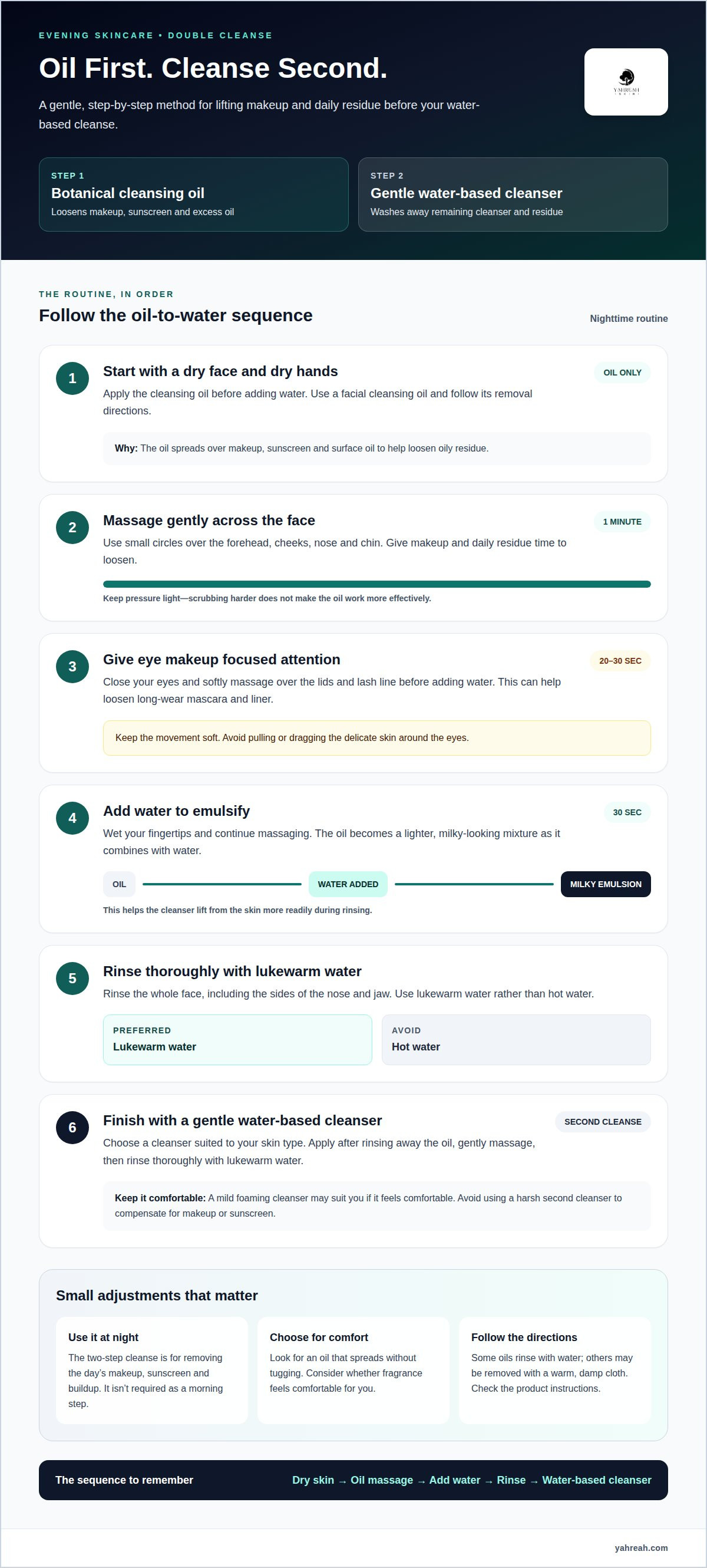
A botanical cleansing oil for double cleansing is the first step in an evening routine: massage it over dry skin to loosen makeup and excess oil, then rinse and follow with a water-based cleanser. The oil helps lift oil-based residue; the second cleanse washes away what remains. The order is simple once you know the steps.
It makes sense to want makeup and daily buildup gone without making cleansing a harsh, hurried chore. Work gently and give the oil time to spread over your skin before adding water. As it emulsifies, it becomes easier to rinse away.
Here, you’ll learn how cleansing oil works, how to use it in a nighttime double cleanse, and how to adapt the steps when you’re wearing makeup, including long-wear eye makeup. The order is clear: oil first, then a gentle water-based cleanser.
Botanical cleansing oils use plant-derived oils to loosen makeup and excess oil. Unlike an oil, a balm starts solid or semi-solid and softens with warmth. Mineral-oil cleansers are defined by their oil ingredient, not necessarily by how well they cleanse. Choose a texture that feels comfortable on your skin.
At night, cleanse in two steps: start with a botanical oil, then use a gentle water-based cleanser. Choose a second cleanser suited to your skin type that leaves your skin comfortable.
Start with a dry face and dry hands, then massage the oil over your skin in small circles. Work across the forehead, cheeks, nose, and chin for one minute, giving makeup and daily residue time to loosen. Add water and massage for another 30 seconds to emulsify the oil. Rinse with lukewarm water, not hot water.
Choose a gentle water-based cleanser suited to your skin type, such as a mild foaming formula if that feels comfortable. Apply it after rinsing away the oil, then gently massage it over your face before rinsing. Rinse thoroughly with lukewarm water. Avoid using a harsh second cleanser to compensate for makeup or sunscreen.
Choose a botanical oil that spreads comfortably and has clear rinse-off directions. Pair it with a suitable second cleanser to complete your evening routine.
Start with an oil cleanser intended for facial cleansing, and use it as the first step at night. Check whether its directions call for rinsing with water or removing it with a warm, damp cloth. A lightweight texture may feel easier to spread, while a richer oil may offer more slip. Choose based on comfort, not botanical wording alone.
Read the ingredient list and choose a formula that suits your preferences and skin. Papaya extract is one botanical ingredient used in cleansing products; it’s a fruit enzyme described as helping exfoliate and soften skin. Its presence alone doesn’t tell you how the full formula will feel. Consider the complete ingredient list, scent, texture, and directions together.
For a thoughtful next step, explore botanical skincare as part of your evening routine.
Yahreah Skin offers wellness products for readers who want to complement mindful personal care with broader self-care essentials. Its range includes women’s health supplements, men’s health supplements, and premium supplements. These products are separate from the cleansing steps above, which explain how to use an oil cleanser and a second cleanser in an evening routine.
Turn to Yahreah Skin when you’re exploring wellness products alongside your daily care rituals. For questions about the products, contact Yahreah Skin for more information.
Build a thoughtful routine with small choices you can repeat comfortably. Notice how your skin feels after cleansing, whether the texture suits your preferences, and whether the steps fit naturally into your evening. Let those observations guide adjustments instead of adding products or scrubbing harder. Personal care can be both practical and restorative.
Choosing a botanical cleansing oil for double cleansing is one part of a broader approach to everyday wellbeing. Yahreah Skin offers a range of wellness products, and you can get in touch to explore what may suit your interests. Contact Yahreah Skin for help and take your next step toward a more intentional self-care routine.
Keep your routine gentle, consistent, and guided by what feels right for you. A little care, practiced with intention, can make the end of the day feel calmer.
Apply cleansing oil to dry skin and follow the product’s directions for how much to use and how to remove it. When wearing makeup, take time around the hairline and nose, where residue can be easy to miss. Use a gentle touch, especially around your eyes. Rinse or remove the oil as directed, then use a suitable second cleanser.
Double cleansing is a two-stage face-washing routine, usually done in the evening. It uses an oil-based cleanser followed by a water-based one, rather than washing twice with the same product. The first step helps lift oil-based makeup and sunscreen; the second cleanses afterward. It can be useful on days you wear makeup or sunscreen, but it isn’t a required morning ritual.
A botanical cleansing oil is an oil cleanser formulated with plant-derived ingredients. In a double cleanse, it helps loosen makeup, sunscreen, and excess oil so they can be rinsed away before the next cleanser. “Botanical” alone doesn’t describe the full formula or how it feels, so read the ingredient list and directions to understand the specific product.
Start with a dry face and gently spread the oil over areas where makeup or sunscreen collects, including the sides of your nose and jawline. Follow the label’s instructions for adding water and rinsing. Once the oil cleanser is removed, wash with a gentle water-based cleanser suited to your skin. Take care to rinse thoroughly around the hairline.
Choose an oil cleanser whose directions address sunscreen or long-wear makeup, rather than relying on botanical ingredients alone to predict how it performs. For waterproof mascara or liner, follow the product’s eye-area directions and let the cleanser loosen residue without pulling at the skin. No single botanical oil is best for every formula or makeup routine.
Some cleansing oils can contribute to clogged pores or breakouts for some people; a plant-based label doesn’t mean a formula is non-comedogenic. If you’re acne-prone, choose a product labeled non-comedogenic and rinse it away as directed before using your second cleanser. Pay attention to how your skin responds as you introduce it instead of assuming every botanical formula will feel the same.


