

 USD
USD EUR
EUR
 AUD
AUD
 GBP
GBP
 JPY
JPY
 INR
INR
 MXN
MXN
 CAD
CAD
 JMD
JMD
Total: $0.00
Taxes and shipping calculated at checkout


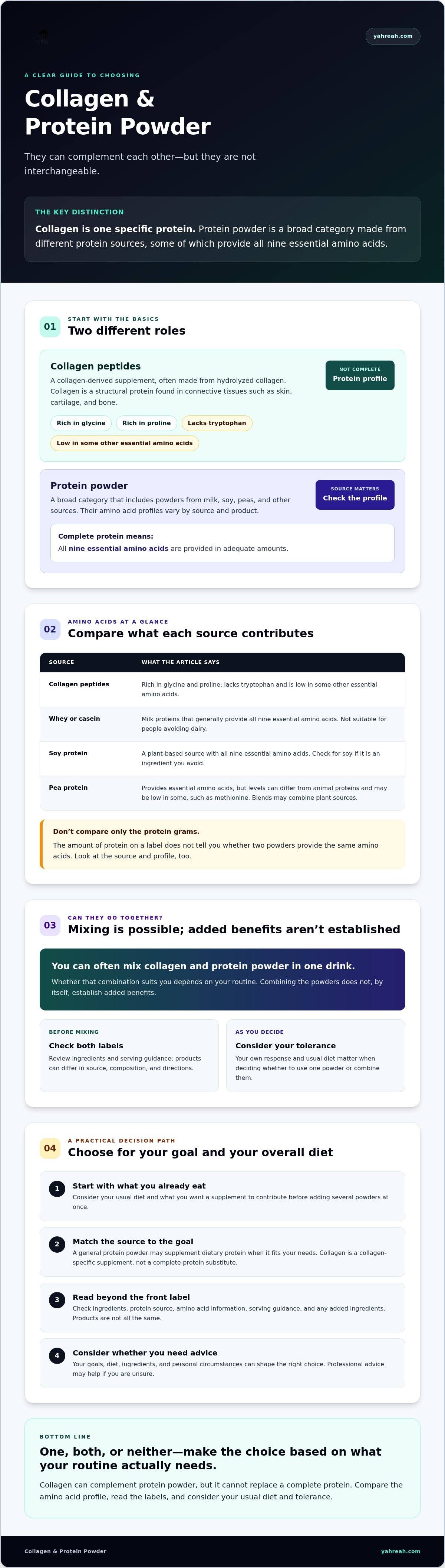
Collagen can complement protein powder, but it can’t replace a complete protein. Mixing collagen and protein powder may suit a routine with more than one goal, but the two aren’t interchangeable. Collagen lacks the essential amino acid tryptophan, while many common protein powders provide all nine essential amino acids.
If you’re unsure whether collagen counts toward your protein intake, whether taking both is useful, or how to compare serving sizes and ingredients, you’re not alone. Supplement labels can make a simple choice feel complicated. Start with what you already eat and what you want from a supplement, rather than adding several powders at once.
This guide explains how collagen and dietary protein powders differ, when combining them may be practical, and what to check on product labels. You’ll also learn why complete protein matters when considering overall protein needs, and how collagen’s distinct amino acid profile affects its role. With those differences in mind, you can decide whether one, both, or neither fits your goals and daily habits.
Collagen is a specific structural protein, while protein powder is a broad category of powdered supplements made from different protein sources. That distinction matters: collagen powder provides collagen-derived peptides, but it isn’t nutritionally interchangeable with a complete protein powder.
Many collagen powders contain hydrolyzed collagen peptides. Hydrolysis breaks collagen into smaller protein fragments that can be mixed into drinks or foods. Collagen is a structural protein found in connective tissues, including skin, cartilage, and bone. The collagen molecule has a distinctive structure that helps explain its role in these tissues, but that doesn’t make collagen a substitute for every dietary protein.
Ingredient sources and processing can vary by product. Check the label to see what the collagen comes from, how it’s described, and whether other ingredients have been added. Don’t assume that every powder has the same composition or serving guidance.
Protein powder can be made from whey or casein, which come from milk, or plant sources such as soy and pea. These sources differ in their amino acid profiles. Amino acids are the building blocks of protein; nine are considered essential because the body can’t make enough of them, so they must come from food.
Some protein sources, including whey, casein, and soy, provide all nine essential amino acids in meaningful amounts and are commonly described as complete proteins. Plant-based powders vary. Pea protein contains essential amino acids, but levels of certain amino acids may be lower. Some products combine plant sources to provide a broader profile. Check the ingredients and nutrition information rather than relying on the front label alone.
Collagen is low in several essential amino acids and lacks tryptophan, so it isn’t considered a complete protein. It’s rich in amino acids such as glycine and proline, which are characteristic of collagen, but its profile differs from proteins used to supply a wider range of essential amino acids. If you’re comparing collagen and protein powder to meet general dietary protein needs, consider the source and amino acid profile, not just the grams of protein listed per serving.
In practice, start the comparison with your goal and overall diet. A powder’s category name doesn’t tell the whole story. Read the ingredient list and serving details to understand what you’re choosing.
A powder’s protein grams tell you how much protein it contains, not whether it supplies the same amino acids as another powder. The source and amino acid profile matter. That’s why collagen and protein powder can have different nutritional roles even when their labels show similar protein amounts.
| Powder type | Common source | Amino acid profile | Typical use and key limitation |
|---|---|---|---|
| Collagen peptides | Animal connective tissue | Rich in glycine and proline; lacks tryptophan and is low in some other essential amino acids | Chosen as a collagen-specific supplement; not a complete protein for meeting all essential amino acid needs |
| Whey or casein | Milk | Generally complete, providing all nine essential amino acids | Can supplement dietary protein; not suitable for people avoiding dairy |
| Soy protein | Soybeans | Complete, with all nine essential amino acids | Plant-based protein option; check for soy if it’s an ingredient you avoid |
| Pea protein | Yellow peas | Provides essential amino acids, though its profile differs from animal proteins and may be low in some, such as methionine | Plant-based option; blends may combine sources to broaden the amino acid profile |
No. A complete protein supplies all nine essential amino acids in adequate amounts. Collagen lacks tryptophan and has relatively low levels of some others. Collagen peptides are collagen-derived protein fragments, not a complete dietary protein. Incomplete doesn’t mean useless; it means the powder has a different nutritional profile and shouldn’t automatically replace a complete protein source. The Harvard T.H. Chan School of Public Health also offers a measured overview of collagen supplements and the evidence around them.
A general protein powder, such as whey, soy, or a suitable plant blend, may help supplement protein from meals when it fits someone’s diet and needs. Collagen may appeal to someone specifically seeking a collagen-derived supplement, but it shouldn’t be treated as a proven shortcut to changes in skin, joints, or recovery. Claims and evidence vary, so consider your overall eating pattern rather than choosing based on a trend.
For a practical comparison, look beyond the protein number on the front of the package. Check the protein source, ingredients, amino acid information if provided, and serving guidance. If you’re exploring supplements more broadly, you can also review wellness supplements with ingredient transparency in mind.
Many people can mix collagen and protein powder in one drink, provided both product labels allow it and the combination suits their individual tolerance. Combining them can be practical, but it isn’t a requirement and doesn’t automatically create extra benefits. Being able to stir two powders together is different from having evidence that taking them together works better.
Keep their roles clear. Adding collagen to a complete protein powder doesn’t change collagen’s own amino acid profile or make collagen a complete protein. The drink contains the amino acids supplied by each ingredient. For more context on collagen as a supplement, see The Nutrition Source from Harvard.
If both powders already fit your routine, mixing them into a smoothie may be convenient. For example, you could add each to a breakfast smoothie rather than prepare two separate drinks. But using both is optional. A second powder isn’t automatically useful just because it can be mixed with the first.
Keep track of what you add. Note each serving and its ingredients so you can check the total amount of protein, sweeteners, flavorings, and added nutrients in the drink. This is especially helpful if either powder is already blended with other ingredients.
Texture and taste matter, too. Collagen peptides may dissolve differently from another protein powder, and the finished drink can taste sweeter, thicker, or more strongly flavored depending on the formulas. Cold liquids, fruit, and other smoothie ingredients can also affect the result. Start with the serving directions on each label, then adjust the liquid or blend ingredients to suit your preference without exceeding the recommended servings.
A thoughtful routine starts with clear labels and your own needs. For general supplement information, you can explore wellness supplement options without assuming that every product category is available.
A useful choice starts with your needs, not the trendiest label. Use this five-step framework to compare options and decide whether either powder belongs in your routine. Personal goals can guide your questions, but they can’t replace individualized clinical advice.
Read the full ingredient list and serving information, not just prominent package claims. Look for allergens such as milk or soy, and check whether the product suits your dietary preferences. If a label mentions testing or certification, confirm what the claim covers and who provides it. Clear information makes comparisons more grounded, but it doesn’t guarantee a product is right for everyone.
Supplements are intended to complement, not replace, a varied diet. Choose an option you can use as directed and enjoy enough to maintain a consistent routine. Don’t treat a particular powder as a promise of a specific result. If you’re thinking about supplements as part of a broader approach to well-being, this inside-out clean beauty routine offers additional context.
Keep the decision simple: match the product to your dietary context, read the label closely, and consider professional guidance when personal health questions arise. To explore the brand’s broader range of wellness supplements, review the available product information and ingredients.
Collagen may complement a supplement routine, but it isn’t a stand-in for complete protein. The right choice depends on what you need, what your diet already provides, and whether a product’s ingredients and directions suit you. Use this quick check before adding either powder:
Seek individualized advice before using supplements if you’re pregnant, have a chronic condition, take medication, or have persistent symptoms. A healthcare professional can consider your circumstances and help address questions about suitability or possible interactions. An article can explain general differences between products, but it can’t diagnose your needs or determine what’s right for you.
Start with meals and everyday needs before adding another supplement. If you choose a product, read its full ingredient list and directions, then consider whether its taste and serving routine are practical for you. Supplements should complement a varied diet, not displace it, and choosing one doesn’t guarantee a particular outcome.
For broader quality considerations, explore this clean supplement brands guide. If you’re also considering how daily habits fit into a wider wellness routine, the inside-out clean beauty routine offers related context.
Choose a next step that feels manageable: match the product to your needs, check the label, and seek professional advice when your health situation calls for it. If you’d like to learn more about Yahreah Skin’s broader wellness approach, explore the brand’s wellness information and products. Review the available product details to decide whether a particular supplement fits your routine.
The clearest takeaway is that collagen and protein powder have different nutritional roles. Collagen may complement a routine, but it isn’t a substitute for complete protein. Combining powders can be convenient if both fit your needs and their labels support using them together, yet mixing them doesn’t guarantee added benefits.
Make your next step a considered one: reflect on your diet, compare ingredients and serving directions, and notice how a product fits your routine. If pregnancy, a health condition, medication, or persistent symptoms raise questions, seek individualized guidance from a qualified healthcare professional.
Yahreah Skin emphasizes clean ingredients and cruelty-free formulations, and states that manufacturing takes place in FDA-registered facilities in the USA. Facility registration should not be taken as FDA approval of a product or its claims. To explore the brand’s broader wellness approach, visit Yahreah Skin’s wellness approach.
Small, informed choices can make a routine feel simpler and more intentional. Start with what makes sense for you, and let clear information guide the rest.
Yes, many people can combine them in a drink if both labels allow it and the ingredients suit their needs. Check serving directions, allergens, sweeteners, and other added ingredients, especially if either powder is a blend. Mixing them is optional and doesn’t automatically provide extra benefits. If you’re pregnant, have a medical condition, or take medication, ask a qualified healthcare professional before adding supplements.
No. A complete protein provides all nine essential amino acids in adequate amounts. Collagen lacks tryptophan and is low in some other essential amino acids, so it doesn’t have the same profile as complete sources such as whey, casein, or soy. That difference doesn’t make collagen useless. It means you shouldn’t rely on collagen alone to provide the range of essential amino acids your diet needs.
Yes, collagen contributes protein grams, so its amount can be included when reviewing the protein listed on a product label. But those grams don’t make collagen nutritionally equivalent to a complete protein. Because collagen lacks tryptophan and is low in some essential amino acids, consider your overall diet and other protein sources rather than relying on collagen to meet all your protein needs.
Collagen peptides are small protein fragments made by breaking down collagen, often for use in powdered supplements. Protein powder is a broad category that can contain collagen, whey, casein, soy, pea, or other protein sources. These powders differ in their amino acid profiles and uses. Check the ingredient list to identify the source, since the words “protein powder” alone don’t tell you whether it’s complete.
Usually, yes, if the directions for both products permit it and you tolerate the ingredients. You can stir collagen peptides into a prepared shake or blend them with ingredients such as fruit and milk or a milk alternative. The flavor and texture depend on the powders and the liquid. Adding collagen doesn’t change its amino acid profile or turn it into a complete protein.
There isn’t one timing rule that applies to everyone. Choose a time that fits your routine, and follow the product’s serving directions. For example, you might add a powder to breakfast if that makes it easier to remember. Your total diet and the type of protein matter more than picking an exact time. Ask a qualified healthcare professional if you need guidance specific to your health.
Check the protein source, serving size, protein per serving, full ingredient list, and directions. Review allergen information, such as milk or soy, and look for sweeteners or added nutrients that may overlap with other products you use. If the label mentions third-party testing or certification, verify what the claim covers instead of assuming. Compare products by their ingredients and serving details, not just front-label claims.


