

 USD
 EUR
 AUD
 GBP
 JPY
 INR
 MXN
 CAD
 JMD
Total: $0.00
Taxes and shipping calculated at checkout


Low ferritin may be linked to hair shedding and fatigue, even before anemia develops. A gentle iron supplement for women with fatigue may be worth considering when testing identifies iron deficiency, but the right amount depends on individual needs, not symptoms alone.
It’s understandable to connect persistent tiredness or changes in your hair with low iron. The National Institutes of Health Office of Dietary Supplements says women ages 19 to 50 generally need about 18 mg of iron per day.
This guide explains how low ferritin may relate to hair loss and fatigue, outlines daily iron needs, and reviews possible side effects. It also covers iron supplementation when iron deficiency is present without anemia, helping you understand the role of supplements and consider next steps carefully.
Low ferritin may be associated with hair shedding, and iron deficiency can also cause fatigue. Because hair loss has several possible causes, ferritin results need to be considered in context rather than prompting a supplement choice based on symptoms alone.
Blood tests help clarify the picture. Ferritin reflects stored iron, while a complete blood count (CBC) measures blood cells and includes hemoglobin. A healthcare professional can interpret both results together to assess iron deficiency and whether anemia is present.
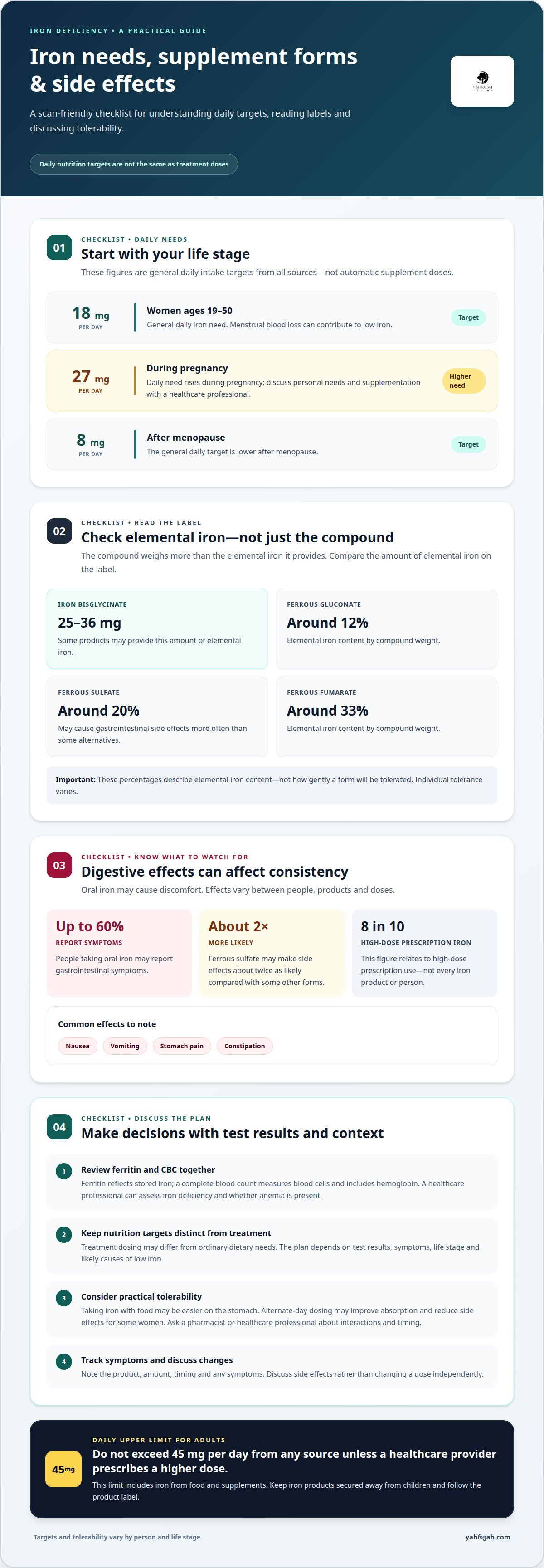
For a stomach-conscious comparison, look at iron bisglycinate and ferrous gluconate alongside other forms. Bisglycinate products may provide about 25-36 mg of elemental iron; ferrous gluconate contains around 12%. Ferrous sulfate contains around 20%, and ferrous fumarate around 33%. These percentages describe elemental iron, not how gently a person will tolerate each form.
Ferrous sulfate may cause gastrointestinal side effects more often than some alternatives, though individual tolerance varies. Check the label for elemental iron, then discuss a suitable form and dose with a healthcare professional, especially if stomach discomfort has affected your use of supplements before.
Taking iron with food may make a routine easier on the stomach. Alternate-day dosing may improve absorption and reduce side effects for some women. Food, medicines, and other supplements can also affect absorption, and the relevant interactions and timing depend on what you take. Ask a pharmacist or healthcare professional to review your medication and supplement list.
According to the National Institutes of Health Office of Dietary Supplements, adults should not get more than 45 mg of iron per day from any source unless a healthcare provider prescribes a higher dose. This daily upper limit includes iron from food and supplements. Keep iron products secured away from children, and follow the product label.
Daily iron needs vary with age, pregnancy, and menopause. These dietary targets describe total intake, not an automatic supplement or treatment dose.
For women ages 19 to 50, the National Institutes of Health Office of Dietary Supplements states a general need of 18 mg of iron per day. During pregnancy, the amount rises: pregnant women generally need 27 mg of iron per day, according to the National Institutes of Health Office of Dietary Supplements. After menopause, women generally need 8 mg of iron per day, according to the National Institutes of Health Office of Dietary Supplements.
These differences reflect changing needs across life stages. Menstrual blood loss can contribute to low iron, while pregnancy changes the body’s requirements. After menopause, the usual daily target is lower. Children have age-specific needs too, so adult guidance shouldn’t be applied to them. Consider life stage, dietary intake, and symptoms together rather than choosing a supplement based on age alone.
A recommended daily intake is a nutrition target, not a prescription for treating iron deficiency. A supplement’s listed elemental iron is the amount of iron itself; the compound, such as ferrous sulfate, weighs more. That distinction explains why labels listing different compound weights may provide different amounts of elemental iron.
When blood tests show deficiency, treatment dosing may differ from the amount needed to meet ordinary dietary needs. The appropriate plan depends on test results, symptoms, life stage, and likely causes of low iron. A healthcare professional can assess these factors and advise whether supplementation is suitable. Don’t increase a dose simply because fatigue continues; iron absorption and individual needs vary.
For a practical next step, compare your life-stage daily target with iron from food and any supplement. Review the label’s elemental iron amount with a healthcare professional, especially during pregnancy or when managing persistent symptoms. This keeps nutrition goals distinct from treatment decisions and avoids assuming that more iron will address every cause of fatigue.
Oral iron can cause digestive discomfort, though the effects vary between people and products. Knowing what to watch for can help you discuss a tolerable approach with a healthcare professional.
Nausea, vomiting, stomach pain, and constipation are common gastrointestinal side effects associated with iron supplements. Up to 60% of people report gastrointestinal symptoms from oral iron. These effects can make a daily routine difficult, particularly if discomfort disrupts meals, sleep, or exercise.
Ferrous sulfate may make gastrointestinal side effects about twice as likely compared with some other forms. High-dose prescription iron is associated with symptoms in 8 out of 10 people taking it. That figure describes high-dose prescription use, not every iron product or every person.
Notice any pattern after taking a dose. For example, note whether nausea follows a capsule or constipation persists over several days. Liquid iron is another format, but the form alone doesn’t predict how your stomach will respond. Dose, formulation, and personal tolerance all matter.
Digestive symptoms are the most clearly described effects here; don’t assume every new symptom comes from iron. If a reaction appears after starting a supplement, record the timing, amount, and product form. Those details can help a healthcare professional assess whether the effect may be associated with the supplement.
Side effects can affect consistency: 50% of people typically stop taking iron because of them. Rather than changing a dose independently, discuss symptoms with a healthcare professional. They can review the product and the reason for supplementation, then consider a personalized approach to tolerability.
For a practical conversation, bring the supplement label and a brief symptom record to your healthcare professional. Include when you take it, whether you take it with food, and any effect on everyday activities such as exercise. If stomach symptoms are severe or persistent, seek medical advice instead of simply stopping or increasing the dose.
Iron deficiency can contribute to fatigue before anemia appears on a blood test. A 2018 review found that iron supplementation reduced fatigue in people with iron deficiency without anemia.
Common signs include tiredness, weakness, shortness of breath, pale skin, cold hands or feet, dizziness, and lower athletic performance. Ferritin below 30 µg/L may accompany symptoms in women, even before anemia develops. In the United States, up to 1 in 5 women ages 25 to 54 have iron deficiency.
Periods can contribute to iron loss, but they aren’t the only possible cause. A healthcare professional can assess symptoms alongside ferritin and a complete blood count, including hemoglobin. Together, these help distinguish low iron stores from anemia and guide whether supplementation is appropriate. Fatigue alone doesn’t establish iron deficiency.
See a healthcare professional before starting iron if fatigue is persistent, unexplained, or accompanied by shortness of breath, dizziness, or weakness. Blood tests can identify low ferritin and assess anemia; they can also help ensure another cause needing attention isn’t overlooked. Discuss pregnancy, heavy periods, current medicines, and previous iron results.
If supplementation is recommended, follow the dose and schedule provided rather than choosing a higher amount yourself. A gentle iron supplement for women with fatigue should be considered in light of test results and professional guidance. Ferrous sulfate is one form, but nausea and other digestive effects can make taking iron difficult. A healthcare professional may consider an alternate-day schedule, which can improve absorption and reduce side effects for some women. After menopause, women generally need 8 mg of iron per day; follow-up laboratory tests may be ordered 8 to 12 weeks after supplementation begins to assess iron levels and response.
Keep a simple record of fatigue, nausea, and your supplement schedule to support follow-up. Explore supplement options for women’s wellness as part of a considered routine alongside appropriate testing and care. A gentle iron supplement for women with fatigue is best approached as one part of a measured plan, not a substitute for finding the cause of symptoms.
Yahreah Skin offers Women's Health Supplements as part of a considered approach to everyday wellness. If testing identifies low iron, use supplements thoughtfully alongside guidance from a healthcare professional, rather than treating a general wellness product as a substitute for an iron treatment plan.
Choose a routine grounded in clear information: understand your test results, follow professional advice, and review supplement labels for ingredients that suit your needs. Yahreah Skin emphasizes clean ingredients and cruelty-free formulations, with products manufactured in FDA-registered facilities in the USA. These details can help you make an informed choice about the supplements you add to your wellness routine.
For questions about Yahreah Skin’s Women's Health Supplements, contact Yahreah Skin.
Let your next step be guided by what your body needs, not pressure to try another supplement quickly. If you’re considering a gentle iron supplement for women with fatigue, use your test results and healthcare professional’s advice to shape that decision. An informed, measured routine leaves room to adjust as your needs change.
Yahreah Skin offers Women's Health Supplements, Men's Health Supplements, and Premium Supplements for people exploring a broader approach to wellness. These products can complement a considered self-care routine, while decisions about iron deficiency and treatment remain grounded in appropriate clinical guidance. Choose intentionally and give yourself space to make decisions that feel right for your wellbeing.
For questions about Yahreah Skin’s offerings, contact Yahreah Skin. Take your next step with care and confidence.
Yes. Ferritin reflects stored iron, and those stores can be low while hemoglobin remains within the laboratory’s reference range. A CBC helps assess hemoglobin and red blood cells, while ferritin provides information about iron reserves. A healthcare professional considers both results, along with symptoms and possible causes, before deciding whether iron deficiency is present without anemia.
Neither type is automatically better for everyone with low ferritin. Heme iron, found in animal foods, has an absorption range of 15-35%; non-heme iron, found in plant foods and fortified products, has an absorption range of 2-20%. Dietary preferences, test results, and the reason ferritin is low all matter. A healthcare professional can help interpret these factors when discussing food or supplements.
It depends on the amount of elemental iron and how well you tolerate a product. Iron bisglycinate products may provide about 25-36 mg of elemental iron, while ferrous sulfate contains around 20% elemental iron. Ferrous sulfate may be associated with about twice the likelihood of gastrointestinal side effects. Compare the label amounts, rather than judging by the compound name alone.
Yes. Adults should not get more than 45 mg of iron per day from any source unless a healthcare provider prescribes a higher dose, according to the National Institutes of Health Office of Dietary Supplements. Count food and supplements together, and avoid doubling up on iron-containing products. Store supplements securely to reduce the risk of accidental overdose.
Check the elemental iron amount per serving, the iron form, serving size, and directions. The elemental amount tells you how much iron the serving provides, rather than the total weight of its compound. For example, the ferrous sulfate amount on a label isn’t the same as its elemental iron amount. Review warnings too, and avoid combining products without checking the total with a healthcare professional.
Compare the elemental iron per serving and your own tolerance, rather than assuming a form’s name predicts your response. Bisglycinate products may provide about 25-36 mg of elemental iron; ferrous sulfate contains around 20%, and may cause gastrointestinal effects more often. For iron polysaccharide, review its elemental iron amount and discuss its suitability with a healthcare professional, especially if past supplements caused stomach symptoms.


