

 USD
 EUR
 AUD
 GBP
 JPY
 INR
 MXN
 CAD
 JMD
Total: $0.00
Taxes and shipping calculated at checkout


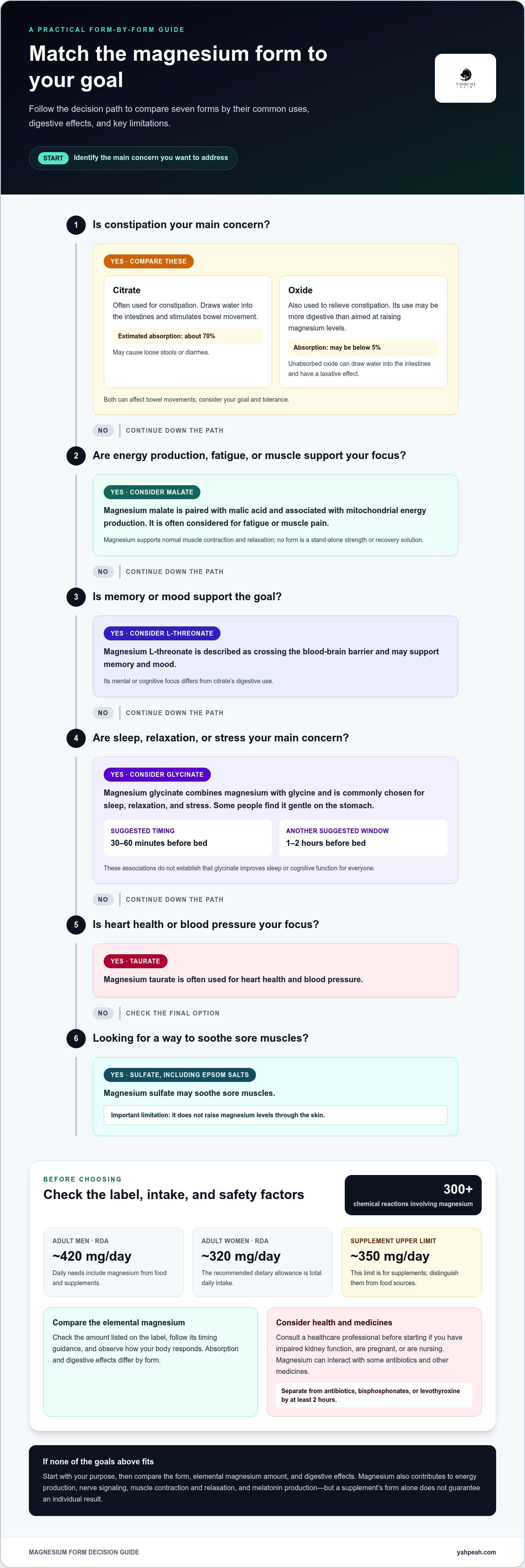
The best magnesium form depends on what you’re hoping to support: sleep, stress, or strength. For sleep, magnesium glycinate is a common choice, and taking magnesium 30 to 60 minutes before bedtime is one suggested timing. In The Magnesium Protocol, decoding seven forms for sleep, stress, and strength starts with matching the form to your goal, not assuming every type works the same way.
It makes sense to look for one supplement that supports several aspects of well-being. But magnesium forms differ in how they’re used, and some are more likely to affect digestion. Comparing them can help you narrow your options without turning a wellness routine into guesswork.
This guide explains seven forms and how they relate to sleep, stress, and muscle function, then looks at when people take magnesium for sleep. You’ll also learn why dose, medications, and kidney health matter when considering a supplement. A calmer routine starts with clear information.
For sleep support, magnesium is commonly taken 30 to 60 minutes before bedtime. The right supplement choice also depends on your goal, diet, medications, and health.
Magnesium glycinate combines magnesium with glycine and is marketed for sleep, stress, and anxiety. Some people choose it for evening relaxation, as it may feel gentle on the stomach. One trial described 300 mg/day of magnesium with reduced anxiety scores after 6 weeks; a review associated supplementation with reduced subjective anxiety across 18 studies. These findings don’t establish that glycinate improves sleep or cognitive function for everyone. Magnesium glycinate sales are projected at $600.61 million in 2026 and $915.16 billion by 2034.
For sleep, take magnesium 30 to 60 minutes before bedtime; another suggested window is 1-2 hours before bed. Choose a form based on your purpose and the amount of elemental magnesium listed on its label. A supplement’s absorption and digestive effects can differ by form, so follow its label and observe how your body responds. Magnesium also contributes to melatonin production, but sleep and daytime ability depend on more than one nutrient.
Daily needs include magnesium from food and supplements. According to the National Institutes of Health Office of Dietary Supplements, the recommended dietary allowance for adult men is around 420 mg per day. For adult women, it is around 320 mg daily. The same office sets the upper limit for magnesium supplements at around 350 mg per day, so distinguish supplemental magnesium from food sources when reviewing intake.
To choose and take a supplement, identify your goal, compare its form and elemental magnesium amount, then follow the label’s timing guidance. People with impaired kidney function, including kidney disease, and those who are pregnant or nursing should consult a healthcare professional before starting. Magnesium can interact with some antibiotics and other medicines; separate it from antibiotics, bisphosphonates, or levothyroxine by at least 2 hours.
Magnesium citrate, malate, and oxide suit different needs because their absorption and digestive effects differ. Citrate is relatively well absorbed, with an estimated absorption of about 70%, while oxide absorption may be below 5%. Malate is associated with mitochondrial energy production. These distinctions help narrow a supplement choice by purpose, rather than relying on the form name alone.
Magnesium citrate draws water into the intestines and stimulates peristalsis, the movement that helps stool pass. That laxative effect is why citrate is often used for constipation. It may be useful when constipation is the concern, but loose stools or diarrhea can be unwanted side effects. The digestive response matters: a form that helps with one goal may feel less gentle when you’re seeking support for another.
Magnesium oxide is also used to relieve constipation, though it is poorly absorbed. Unabsorbed oxide can draw water into the intestines, producing a laxative effect. Its use may therefore be more digestive than aimed at raising magnesium levels. Citrate and oxide can both affect bowel movements, but their absorption differs. Consider your goal and tolerance before choosing either form.
Magnesium malate is paired with malic acid and is described as supporting mitochondrial energy production. That association may interest people exploring energy or muscle support rather than constipation relief. Magnesium L-threonate offers a different comparison: it may support memory and mood and is described as crossing the blood-brain barrier. Its mental or cognitive focus differs from citrate’s digestive use.
A practical comparison starts with your main purpose: citrate or oxide for constipation-related needs, malate for energy production, and threonate for memory and mood support. Then consider absorption and possible digestive side effects. Citrate and oxide differ in how well the body absorbs them. These figures describe forms, not a guarantee of individual results. Choose by the goal you’re addressing, and avoid treating every magnesium supplement as interchangeable.
Magnesium is a mineral involved in more than 300 chemical reactions. It contributes to energy production, nerve signaling, and muscle contraction and relaxation. Those roles explain why the seven forms are discussed for different goals, but the form name alone doesn’t show what a supplement will do. Consider its purpose, elemental magnesium content, and digestive effects.
For muscle strength and exercise recovery, magnesium supports normal muscle contraction and relaxation. Malate is associated with mitochondrial energy production and is often considered for fatigue or muscle pain. Glycinate is commonly chosen for relaxation, while citrate and oxide can affect digestion. These forms have different uses, and none should be treated as a stand-alone strength or recovery solution.
Each form has a distinct profile. Glycinate is associated with sleep and relaxation; citrate is used for constipation. Malate is linked to energy production, while oxide is poorly absorbed but may have a laxative effect. L-threonate is described as supporting memory and mood. Taurate is often used for heart health and blood pressure. Sulfate, including Epsom salts, may soothe sore muscles, but it doesn’t raise magnesium levels through the skin.
Magnesium also plays a role in neurotransmitter activity. It interacts with GABA receptors, which can have a calming effect on nerve activity, and contributes to melatonin synthesis, which helps regulate the sleep-wake cycle. For bone health, magnesium is one part of a broader nutrient picture that includes vitamin D. A magnesium deficiency can affect normal body functions, while medications may influence whether a supplement is suitable or when to take it.
In the United States, supplement prices vary by form and product. Compare the cost per serving with the amount of elemental magnesium, rather than judging by the compound’s total milligrams. Magnesium citrate and L-threonate, for example, differ in composition and intended use. Label details and your main goal are more useful guides than price alone.
Magnesium’s relationship with rest involves several systems, not a single switch. It helps regulate nervous-system activity, muscle relaxation, and melatonin production, which supports the sleep-wake cycle. Glycinate is associated with GABA neurotransmission, a calming pathway. Its glycine component is an amino acid, while magnesium supports many functions beyond sleep. The Magnesium Protocol: Decoding the 7 Forms for Sleep, Stress, and Strength offers a framework for considering these connections without treating one supplement as a complete solution.
For an evening routine, glycinate is often selected for relaxation and stress support. One suggested approach uses 300-400 mg of elemental magnesium glycinate daily for moderate anxiety. Another describes 200 mg as needed when anxiety symptoms arise, up to three times daily. These are different approaches, not a reason to combine doses automatically. The supplement’s elemental amount matters, as does magnesium from other products.
Timing can follow the intended effect. A bedtime dose suits people using glycinate as part of a wind-down routine, while daytime use follows a different goal. Magnesium taurate is described with a 300-400 mg daily amount, split between morning and evening. Magnesium L-threonate, by contrast, is discussed for mood and memory, not simply as a bedtime form. Match the form and schedule to your purpose.
Relaxation also involves habits beyond magnesium supplements. A consistent bedtime, a quieter wind-down, and attention to late-day stress can support a routine without adding another supplement. Consider whether your main concern is sleep, daytime anxiety, or muscle tension, then compare forms against that goal. The Magnesium Protocol: Decoding the 7 Forms for Sleep, Stress, and Strength can help organize that comparison. If you’re building a broader wellness routine, explore premium supplements as one part of your self-care choices.
Yahreah Skin offers Women's Health Supplements for readers considering supplements as part of a broader wellness routine. After comparing magnesium forms, let your main goal guide your next step: identify the support you’re seeking, review supplement labels carefully, and consider how a product fits into your existing routine.
Yahreah Skin also offers Men's Health Supplements, Premium Supplements, and Natural Skincare Products, with options across wellness and daily care. Choose the category that aligns with your needs rather than assuming every supplement serves the same purpose. For questions about whether magnesium supplementation suits your health situation, seek guidance from a healthcare professional.
Explore Yahreah Skin’s offerings at yahreah.com.
Your next step can be simple: choose one wellness priority, then shape your routine around it. Notice what you want to support, such as a calmer evening or steadier daily energy, and keep your choices aligned with that purpose. Let The Magnesium Protocol: Decoding the 7 Forms for Sleep, Stress, and Strength guide how you think about supplements, while leaving room for the broader habits that contribute to well-being.
Yahreah Skin offers Women's Health Supplements, Men's Health Supplements, and Premium Supplements for people exploring options that fit their wellness routines. Choose mindfully, and bring questions about supplement safety or interactions to a healthcare professional.
Explore Yahreah Skin’s offerings and take your next step toward a more considered self-care routine.
Consider low intake in light of eating patterns and risk factors, rather than relying on one specific sign. For example, someone who rarely eats nuts, seeds, legumes, leafy greens, or whole grains may be missing common magnesium sources. Malnutrition and some chronic health conditions can also increase deficiency risk. These clues don’t diagnose a deficiency; they can help you decide when to review your diet with a healthcare professional.
Low intake and a diagnosed deficiency aren’t the same thing. Up to half the population in Western countries may not consume enough magnesium, yet most Americans eat enough and don’t experience a true deficiency. These statements describe different measures: dietary intake can fall short without establishing a clinical deficiency. A food diary covering meals and snacks can help show whether magnesium-rich choices appear regularly.
Risk can rise when diet or health affects magnesium intake or balance. Malnutrition, chronic kidney disease, type 2 diabetes, alcoholism, and inflammatory bowel diseases such as Crohn’s disease and ulcerative colitis are associated with greater deficiency risk. Food processing can matter too: refining grains removes around 80% to 97% of their original magnesium content. A diet relying heavily on refined grains may therefore provide fewer magnesium-rich choices.
Magnesium glycinate is associated with stress and anxiety support, while magnesium L-threonate is discussed for mood and memory. Magnesium taurate is commonly used for heart-health support, not specifically as an anxiety treatment. These different uses don’t make the forms interchangeable or establish them as anxiety treatments. If anxiety affects daily life, discuss appropriate care with a healthcare professional before relying on a supplement.
Yes, food can provide magnesium, and a varied eating pattern can include several rich sources. Consider adding pumpkin seeds or almonds to breakfast, beans or leafy greens at lunch, and chard or dark chocolate with another meal. Whole grains, avocado, and fatty fish also contribute. Your overall intake depends on what you eat consistently, not on one magnesium-rich meal.
There isn’t a guaranteed timeline for noticing a sleep change. Magnesium glycinate may produce a calming effect within 30 to 60 minutes, but that timing doesn’t establish when sleep itself will improve. Track your bedtime, supplement timing, and sleep experience over time rather than judging by one night. If sleep problems persist, consider discussing them with a healthcare professional.


