

 USD
 EUR
 AUD
 GBP
 JPY
 INR
 MXN
 CAD
 JMD
Total: $0.00
Taxes and shipping calculated at checkout


A natural label doesn’t tell the whole story. “Clean” isn’t a regulated term in the beauty industry, so compare natural personal care brands by reading ingredient lists and choosing formulas that fit your skin and routine. Apply the same care to skincare, bath, body, and everyday personal care.
It makes sense to want products that feel gentle, thoughtfully made, and enjoyable to use. But a botanical-sounding name or clean-beauty claim can’t tell you how a formula will work for you. The ingredients and how you use the product matter.
This guide explains what to look for in ingredients, how to assess labels and brand claims, and what to consider when choosing products for your face, bath, and body. You’ll also find practical ways to introduce new products carefully, so your choices are informed, personal, and easy to maintain.
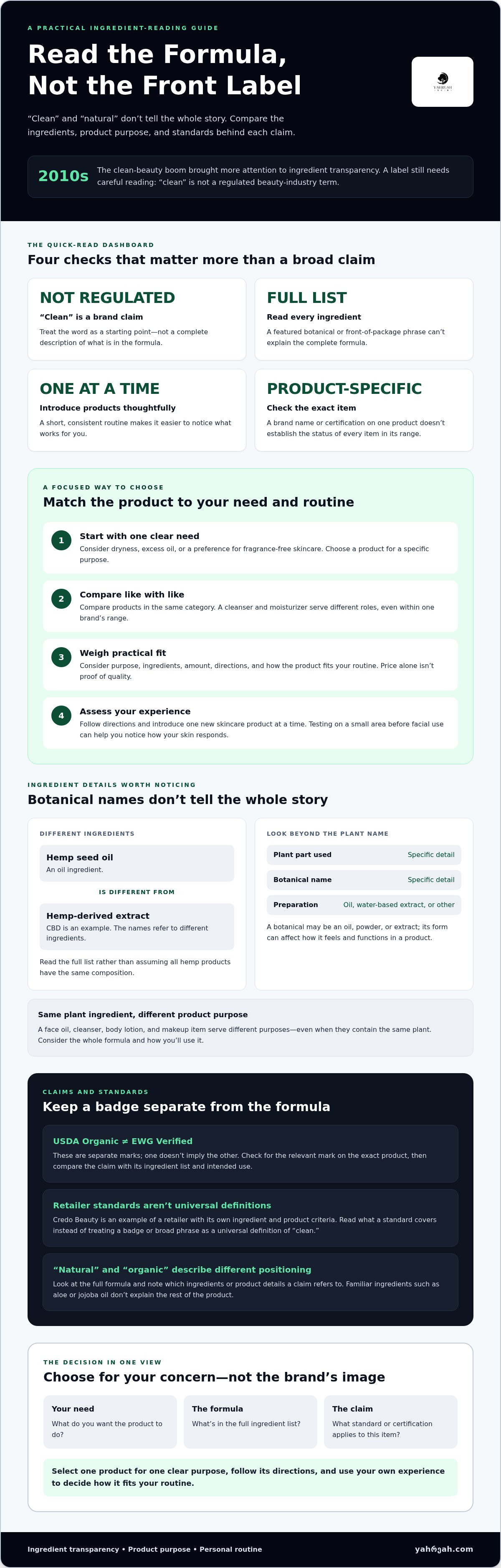
“Clean” can sound reassuring, but the term isn’t regulated in the beauty industry. Treat it as a brand claim, not a complete description of a formula. Compare the ingredient list, product purpose, and the standards behind each claim. The 2010s clean-beauty boom brought more attention to ingredient transparency, but a label still needs careful reading.
Start with your skincare needs. For dryness, compare moisturizers and check whether ingredients such as glycerin or plant oils are included. When choosing a facial cleanser, consider how your skin feels after rinsing, not just the botanical names on the front. For makeup, check whether the ingredients and finish suit your routine. Product experiences are personal, and a short, consistent routine makes it easier to notice what works for you.
Botanical ingredients include plant oils, extracts, and aromatic components. Hemp seed oil, for example, is different from a hemp-derived extract such as CBD: the names refer to different ingredients. Read the full ingredient list rather than assuming all hemp products have the same composition. Natural personal care brands may feature familiar plant ingredients, but “natural” alone doesn’t explain an ingredient’s role or how the complete formula feels.
Credo Beauty offers an example of retailer-defined ingredient and product standards. Its criteria can show how a retailer frames ingredient review, but they aren’t a universal definition of “clean.” Compare stated standards with the product’s ingredient list and packaging claims. Look for a clear explanation of what a standard covers instead of relying on a badge or broad phrase.
Plant sourcing adds another consideration. Medicinal and aromatic plants grow and mature in cycles, so harvest timing can affect when raw materials are available and how they’re processed. For an extract, useful details include the plant part used, its botanical name, and whether it’s an oil, water-based extract, or another preparation. These specifics offer a clearer picture than a general “herbal” claim.
Choose products based on your concern and how you’ll use them, not a brand’s overall image. A face oil, cleanser, body lotion, and makeup item serve different purposes, even when they contain the same plant. Review the full formula, follow directions, and introduce one new skincare product at a time. Testing a product on a small area before facial use can help you notice how your skin responds.
To make an informed choice, compare a brand’s ingredient transparency, product range, and stated standards with your priorities. Then select one product for one clear purpose. This makes it easier to assess your experience and build a more intentional routine.
Choose a skincare brand by matching its formulas to your skin, routine, and ingredient priorities. For certifications, assess the specific product: a brand name alone doesn’t show whether an item carries a USDA Organic seal or EWG Verified mark.
Begin with one clear need, such as dryness, excess oil, or a preference for fragrance-free skincare. Compare products designed for that purpose, including their directions and full ingredient lists. A cleanser and moisturizer have different roles, even within the same brand’s range. For natural skincare, build a simple routine around products you’ll use consistently instead of choosing several formulas at once.
List what you want a product to do, then use that list to compare brands. For example, if you want a lightweight moisturizer, compare texture, intended use, and ingredients before choosing. A creator’s “my favorite” recommendation may offer inspiration, but your needs should guide the final decision.
Compare value by considering a product’s purpose, ingredients, amount, and place in your routine, rather than treating price as proof of quality. A daily cleanser has a different role from an occasional mask. Check whether a product replaces something you already use or adds a new step. This makes comparisons more relevant to your actual skincare habits.
To keep your routine manageable, compare one product category at a time. For example, assess two cleansers by how they fit your skin and how clearly each brand explains its formula. Don’t buy several products together simply because they share an organic label. A focused choice lets you assess each product before making it a regular part of your routine.
“Natural” and “organic” describe different aspects of a product’s positioning, so read the label instead of relying on front-of-package language. Look for familiar ingredients, such as aloe or jojoba oil, and note their position in the ingredient list. A botanical ingredient can be an oil, powder, or extract, and each form can feel and function differently in skincare.
Check the complete formula, not just its featured plant ingredient. A product may contain aloe alongside ingredients that affect its texture, scent, or use. When comparing organic skincare, note which ingredients or product details the claim refers to. This makes claims easier to assess and helps you choose products that fit your preferences.
USDA Organic and EWG Verified are separate marks, so one doesn’t imply the other. Whether a brand carries them is product-specific: look for the relevant mark on the exact item instead of assuming it applies to an entire brand or range. Compare the packaging claim with the ingredient list and intended use.
For each option, note the brand, product name, visible certification mark, and skincare need it serves. This keeps claims distinct from personal preferences. A mark may help you create a shortlist, while texture, ingredients, and how a product fits your routine can guide your decision.
Once you’ve identified the kind of formula you want, explore natural skincare products as one option for a considered routine.
In the United States, describing a personal care product as “natural” doesn’t give it a separate regulatory category. The US FDA’s involvement in cosmetic ingredient approval is limited to color additives. Compare ingredient disclosures, product directions, and specific claims instead of treating “clean” as regulatory approval.
For cleansers, serums, oils, and moisturizers, start with the product’s purpose and your skin’s needs. A cleanser removes daily buildup; a serum is usually chosen for a more targeted step. Oils and moisturizers differ in texture and intended use. For sensitive skin, review the full ingredient list and fragrance information, then introduce one new product at a time.
When comparing US-based beauty brands, examine how clearly they describe formulas and product use. Consider the complete ingredient list, directions, fragrance disclosure, and any stated standards. Credo Beauty is one example of a retailer that publishes its own ingredient and product criteria. Retailer standards can inform your comparison, but they don’t automatically certify every product sold elsewhere.
Cosmetics deserve the same close attention as skincare. For lipstick, consider the ingredients, finish, and feel during wear; for foundation, compare coverage and how it fits your routine. “Clean makeup” is a broad claim, so identify the specific standard behind it. A brand’s ingredient explanations can help you decide whether its cosmetics match your preferences.
Double cleansing can help remove makeup or products that resist water. The first cleanse may use an oil or balm, followed by a water-based cleanser. Choose formulas that suit your skin and follow their directions. Double cleansing is optional, not a requirement for everyone: a single cleanser may be enough when you’re not wearing makeup.
To compare brands efficiently, choose one product category first, such as moisturizer. Review the label and directions, then consider how each formula fits your intended use. Note fragrance, texture, and any ingredients you prefer to avoid. Add products only when they serve a clear role in your routine. This makes US clean-beauty claims easier to evaluate without relying on broad labels alone.
Ethical labels describe different choices, so assess each claim separately. “Vegan” usually refers to ingredients, while “cruelty-free” concerns animal-testing policies. A lipstick can be vegan without a broad cruelty-free claim, or cruelty-free while containing beeswax. Check whether a statement applies to the specific formula, the brand, or its suppliers. Clear explanations are more useful than a single badge.
For a practical review, examine the ingredient list and wording behind each claim. If choosing vegan cosmetics, look for animal-derived ingredients such as lanolin, beeswax, or carmine. Then read the brand’s explanation of animal testing, including whether it addresses ingredients and manufacturing partners. If the explanation is brief, don’t assume one label answers every ethical question.
Packaging deserves the same close attention. A “plastic-free” claim may refer to the outer box, while the cap, pump, seal, or applicator still contains plastic. Check each component. For a glass facial oil, for example, note whether the dropper and lid are also glass. A package described as recyclable may depend on local collection rules and separated components.
Compare sustainable packaging by considering materials, refill options, and how much packaging surrounds the product. A recyclable carton may still come with extra wrapping; a refill pouch may reduce the need to replace a bottle but still use flexible packaging. These trade-offs matter more than a vague “eco-friendly” label. If sustainability is central to your wellness routine, identify the packaging feature you value most and assess it consistently.
“Toxin-free” is a broad cosmetics claim, not a precise description of a formula. Instead of treating it as proof, identify the ingredient or concern the brand discusses. For example, check fragrance disclosure or review ingredients you prefer to avoid. Organic skincare claims also need context: a statement about an organic ingredient doesn’t automatically describe every ingredient in the finished product.
Hydration and formula performance matter alongside ethical priorities. A moisturizer should suit your routine and preferred texture, while you can assess its packaging and claims separately. Compare each product using these points:
A discount may make a product tempting, but it doesn’t clarify its claims. Compare the label, formula, and packaging first, then choose the natural skincare option that fits your needs and values.
Personal care goes beyond facial skincare. A daily routine may include body wash, hand soap, bath products, deodorant, and body lotion. Compare each product by where and how often you use it, and what its label says. This helps you choose botanicals and formulas that fit your real routine, not just an appealing front-label claim.
Start with one category, such as body wash. Read the ingredient list and directions, then consider whether the product suits your preferred texture and scent. A lightly fragranced wash and an unscented lotion, for example, meet different preferences. “Natural” doesn’t explain every ingredient, so assess the full formula and intended use.
Bath products also deserve a closer look. Bath oil, soak, and cleansing bar serve different purposes, and their directions can shape the experience. Use each bath product as directed, especially if it’s concentrated or intended to be diluted. If you choose a body lotion after bathing, consider how its texture fits your routine and whether you prefer a quick-absorbing or richer feel.
Before applying a new skincare product to your face, test it on a small area of your body. This lets you observe how it feels on your skin. Introduce one new formula at a time rather than changing your body wash, lotion, and facial care together. That way, if you notice an unwanted response, you can identify which product you added.
Freshness matters, too. Check natural skincare products for expiration dates, and follow the package’s storage and use directions. A familiar favorite may not stay suitable indefinitely after opening, so make label dates part of your routine instead of relying on memory.
Keep your choices simple. A bath oil can add a sensory step, while body lotion can serve as an after-bath moisturizer. Neither needs to become a treatment or replace care for a specific skin concern. Choose products for their stated purpose and avoid steps that don’t serve your needs. Botanicals can make a formula feel thoughtfully crafted, but the complete ingredient list still matters.
For a streamlined comparison, note each product’s category, ingredients, directions, expiration date, and packaging. Then choose one product that fills a clear gap in your routine. Explore natural skincare products as you consider which skincare step best complements your bath and body care.
Yahreah Skin offers natural skincare products and women’s health supplements for readers building a considered personal-care and wellness routine. Explore its skincare products if you’re comparing formulas for everyday use, or consider its women’s health supplements as a distinct part of your wellness choices.
The range also includes men’s health supplements and premium supplements. These offerings serve different interests, while skincare and supplements remain distinct categories with different uses. Choose according to what you’re looking for, and review product information as part of your decision.
For a calm next step, explore Yahreah Skin’s offerings or contact Yahreah Skin to learn more.
Personal care preferences can shift with the seasons and your daily rhythms. Rather than chasing a perfect routine, let your next choice meet one clear need. This keeps your approach considered and gives you room to notice which textures, ingredients, and rituals you genuinely enjoy. Natural personal care brands can help you compare options, but the right choice is the one that suits your routine.
Yahreah Skin offers women’s health supplements, men’s health supplements, and premium supplements. Consider these as distinct wellness options alongside personal care, and take time to decide what fits your priorities. A thoughtful choice doesn’t need to change everything at once. A brief note about what you reach for most can help you make future choices intentionally rather than adding products out of habit.
When you’re ready to explore Yahreah Skin’s offerings, visit Yahreah Skin. Keep choosing with curiosity and care, and let your routine become a practice that supports you.
Look for ingredients that fit the product’s purpose and your preferences. For example, compare glycerin or aloe in a moisturizer and jojoba oil in a facial oil. Read the complete ingredient list, not just highlighted ingredients on the front label. If fragrance is a concern, check for fragrance or scented botanical oils, then choose a formula suited to your routine and intended use.
Compare ingredient transparency, product categories, and clearly stated standards instead of relying on a universal ranking. For US-made skincare, Yahreah Skin offers natural skincare products that are made in the USA and cruelty-free, and are not tested on animals. Compare the specific product information with your needs, whether you’re looking for a cleanser, moisturizer, or body product. A suitable choice should align with your priorities and everyday routine.
There’s no universal definition of “natural” for beauty products, so brands may use the word differently. In the United States, the FDA’s involvement in cosmetic ingredient approval is limited to color additives. To understand a claim, look for the ingredient’s full name, its source, and the brand’s explanation of how it uses the term. Clear labeling makes formulas easier to compare.
Compare specific products side by side instead of treating every item from a brand as equivalent. One company may focus on facial cleansers and moisturizers; another may also offer body care or supplements. Note each item’s ingredient disclosures, intended use, and directions. Yahreah Skin offers natural skincare products and supplements, so assess those categories separately according to what you’re seeking.
Prices depend on product category, formula, package size, and the role a product fills in your routine. To compare value, consider the amount in the container and whether it replaces something you already use. A daily cleanser and an occasional mask serve different purposes. Price alone doesn’t establish suitability, so weigh it alongside the ingredient list and intended use.
Plant-derived ingredients may still not suit your preferences or skin. Pay attention to fragrance, essential oils, and ingredients you’ve chosen to avoid. Try a new product on a small area of skin before applying it to your face, and add products separately so you can identify what changed. Follow package directions, especially for concentrated formulas or products intended for particular areas.
Assess each claim separately and for the specific product. Yahreah Skin describes its products as cruelty-free and not tested on animals. Vegan status depends on ingredients, while sustainable packaging claims concern materials and disposal. Review the ingredient list for animal-derived ingredients and examine packaging components such as the cap, pump, and outer carton. One claim doesn’t establish the others.
Credo Beauty is a retailer with its own ingredient and product standards.


