

 USD
 EUR
 AUD
 GBP
 JPY
 INR
 MXN
 CAD
 JMD
Total: $0.00
Taxes and shipping calculated at checkout


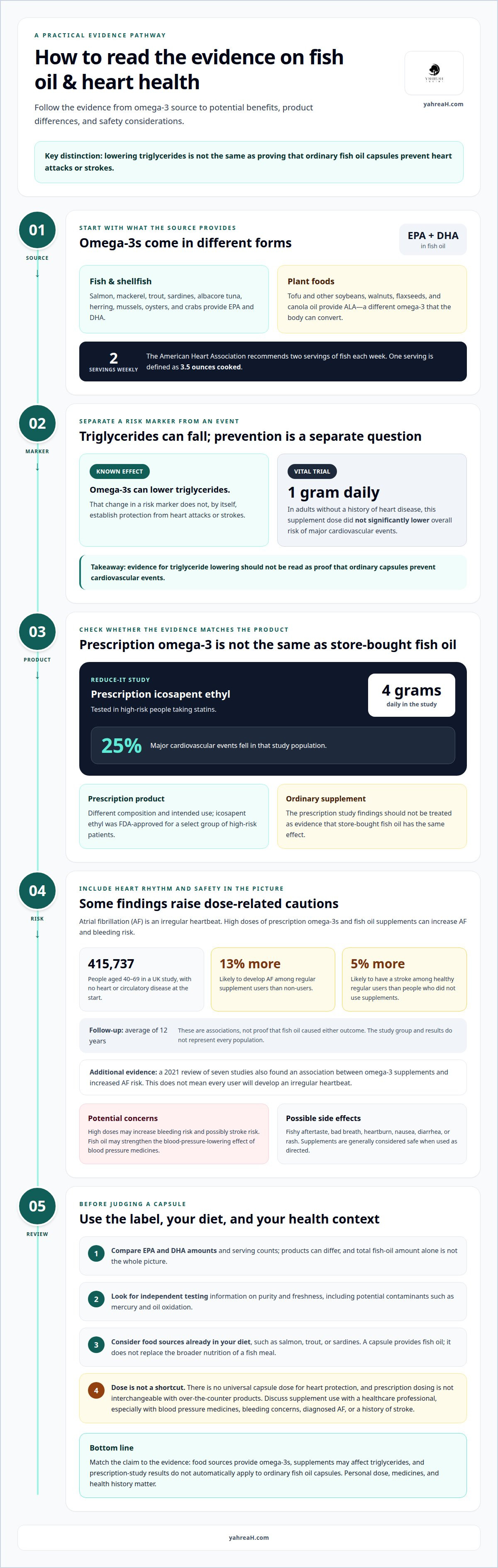
Fish oil can provide omega-3s, but capsules aren’t a guaranteed way to prevent heart disease. In the VITAL trial, participants taking 1 gram of omega-3 supplements daily did not have a significantly lower overall risk of major cardiovascular disease events, according to the National Institutes of Health.
It’s understandable to look for a simple way to support your heart. Fish oil contains the omega-3 fatty acids EPA and DHA, but what they can do for cardiovascular health depends on the evidence and on the kind of product being considered.
Learn how omega-3 fish oil capsules for heart health fit into the picture, what research says about heart attacks and triglycerides, and why findings on atrial fibrillation and stroke risk call for a measured approach. We’ll also look at food sources of omega-3s and how supplements differ from prescription products, so you can better understand the benefits, limits, and risks.
Fish oil may support some heart-health measures, but supplements don’t reliably prevent cardiovascular events. The distinction between everyday capsules and prescription omega-3 medicines matters.
VITAL tested omega-3 supplements for preventing major cardiovascular events in adults without a history of heart disease. Participants in VITAL took 1 gram of omega-3 supplements daily, which did not significantly lower the overall risk of major cardiovascular disease events, according to the National Institutes of Health. Omega-3s can lower triglycerides, but that effect doesn’t mean ordinary fish oil capsules prevent heart attacks or strokes. For readers, the key is to separate changes in a risk marker from proven protection against an event.
Prescription omega-3 medicines are different from typical supplements in composition and intended use. In REDUCE-IT, prescription icosapent ethyl was tested at 4 grams daily among high-risk people taking statins; major cardiovascular events fell by 25% in that study population. The FDA approved icosapent ethyl for a select group of high-risk patients. Those findings shouldn’t be treated as evidence that store-bought fish oil has the same effect.
In the United States, there isn’t one price for fish oil capsules. Cost varies with brand, bottle size, and the amount of EPA and DHA per serving, so compare labels and serving counts.
To assess quality, check the label for EPA and DHA amounts and look for information about independent testing for purity and freshness. See whether testing addresses contaminants such as mercury and oil oxidation, both potential concerns with fish oil.
Fish oil supplements are generally considered safe when used as directed, but side effects can include a fishy aftertaste, bad breath, heartburn, nausea, diarrhea, or rash. High doses may increase bleeding risk and possibly stroke risk. Fish oil can also strengthen the blood-pressure-lowering effect of blood pressure medicines. Keep these points in mind when considering a supplement alongside existing medicines or health conditions.
There is no universal capsule dose for heart protection. Supplement amounts vary, and prescription dosing is not interchangeable with over-the-counter products. Do not treat a higher dose as a shortcut: discuss fish oil with a healthcare professional, especially if you take blood pressure medicine or have concerns about bleeding.
Fish oil findings call for attention to heart rhythm as well as cardiovascular benefits. Atrial fibrillation (AF) is an irregular heartbeat. High doses of prescription omega-3s and fish oil supplements can increase AF and bleeding risk, so dose matters when weighing potential benefits.
A UK study tracked 415,737 people aged 40-69 who had no heart or circulatory disease at the start. Over an average follow-up of 12 years, regular fish oil supplement users in this group were 13 per cent more likely to develop AF than non-users. Healthy regular users were also 5 per cent more likely to have a stroke than people who didn’t use supplements. These results describe associations, not proof that fish oil caused either outcome.
A 2021 review of seven studies also found an association between omega-3 supplements and increased AF risk. The review adds to the concern, but it doesn’t mean every user will develop an irregular heartbeat. Study findings describe patterns across groups; they can’t establish what will happen to a particular person. The UK figures also apply to people without heart and circulatory disease at the study’s start, not every population.
Take dose and personal health history into account before adding a supplement. Someone with diagnosed AF, a history of stroke, or medicines that affect bleeding has different considerations from a healthy adult. High-dose prescription omega-3s are not the same as ordinary fish oil capsules, and evidence about one shouldn’t be automatically applied to the other. Discussing a planned supplement with a healthcare professional helps account for existing conditions and medicines. If you already take fish oil, share the product and dose details during that conversation, rather than increasing the amount to pursue heart benefits.
Fish oil supplies two omega-3 fatty acids: eicosapentaenoic acid (EPA) and docosahexaenoic acid (DHA). The body can’t manufacture omega-3 fatty acids, so food or supplements provide them. For heart-health decisions, knowing which omega-3s a source contains helps distinguish fish oil from plant sources, which provide a different type.
Salmon, mackerel, trout, sardines, albacore tuna, and herring contain EPA and DHA. Shellfish, including mussels, oysters, and crabs, are also dietary sources. The American Heart Association recommends eating two servings of fish weekly, with each serving defined as 3.5 ounces cooked. That recommendation offers a food-based way to include marine omega-3s in meals.
Plant foods provide alpha-linolenic acid (ALA), which the body can convert into omega-3 fatty acids. The American Heart Association names tofu and other soybeans, walnuts, flaxseeds, and canola oil as ALA sources. ALA is not the same as the EPA and DHA found in fish. Including these foods can broaden dietary omega-3 sources, while fish and shellfish supply EPA and DHA directly.
Capsules offer another way to consume fish oil, but they don’t replace the broader nutrition of a meal built around fish. A serving of salmon, for example, provides EPA and DHA as food; a capsule provides fish oil. Products can differ in their EPA and DHA content, so the label’s amounts matter more than the total fish-oil amount alone. Check those figures when comparing products, and consider your usual intake of salmon, trout, or sardines. That context helps clarify whether a supplement is adding omega-3s or duplicating sources already present in your meals.
The evidence looks different depending on the outcome measured. Omega-3 fatty acids can significantly reduce blood triglycerides, a type of fat in the blood linked with cardiovascular risk. But improving a risk marker doesn’t automatically mean supplements prevent heart attacks or strokes. That distinction helps put claims about omega-3 fish oil capsules for heart health in perspective.
A 2020 review examined 23 studies involving 43,998 participants and found that EPA and DHA reduced triglycerides by about 15 percent. This supports a measurable effect on blood fats, though it doesn’t establish the same benefit for every cardiovascular outcome. Omega-3s may slightly improve HDL cholesterol, while an increase in LDL cholesterol has also been observed. The overall picture depends on which marker or event a study evaluates.
Evidence about stroke prevention is less encouraging. A 2020 review of 31 trials, involving 138,888 participants, found that increasing omega-3 supplements had little or no effect on reducing strokes. The scale of those trials makes this an important counterpoint to claims that capsules broadly protect against cardiovascular events.
A 2019 review concluded that, for the general population, consuming 1 gram per day of omega-3 fatty acids provides some cardiovascular health benefits. That conclusion needs to be read alongside the mixed findings for specific outcomes, rather than as proof that a supplement prevents disease. Research on people with existing heart conditions also differs from research involving the general population, so study participants matter when interpreting results.
For a balanced view, separate three questions: do omega-3s change triglycerides, do they affect cholesterol markers, and do they reduce events such as stroke? The answers aren’t interchangeable. For thoughtful, whole-person wellness, explore holistic wellness support.
Yahreah Skin offers supplements and natural skincare for people building a thoughtful wellness routine. If you’re weighing fish oil alongside broader wellbeing choices, its women’s health, men’s health, and premium supplements provide options across different needs, without replacing evidence-based guidance about heart health. A considered routine starts with understanding what a supplement can and can’t do, then choosing products in keeping with your priorities. Explore Yahreah Skin’s offerings as one part of that wider approach to personal care. For questions about the products, contact Yahreah Skin.
A decision about omega 3 fish oil capsules for heart health should begin with your own routine, not a promise on a label. Consider how often fish already appears in your meals, what you hope a supplement will support, and whether taking another product fits comfortably into your day. Bring those points, along with any medicines you use, into a conversation with a healthcare professional before starting or changing a supplement.
That thoughtful pause can help distinguish a personal wellness choice from medical care. Supplements are one part of well-being, not a substitute for treatment or a complete heart-health plan. If you are also exploring ways to support your broader wellness routine, Yahreah Skin offers natural skincare products and supplements. Choose what feels considered and sustainable, and let reliable guidance shape decisions that matter to you.
Contact Yahreah Skin to learn more about its wellness offerings. A calm, informed approach is a meaningful place to begin.
Omega-3 supplements aren’t established as a general way to prevent heart disease. NICE guidelines don’t recommend fish oil supplements to prevent heart and circulatory diseases. That differs from specific prescription treatment used for certain high-risk patients. For prevention, consider the full picture, including food choices, existing conditions, and medicines, rather than treating a supplement as a stand-alone heart-health measure.
Yes. EPA and DHA can reduce blood triglycerides, though a change in this marker doesn’t automatically mean fewer cardiovascular events. Omega-3s can also slightly improve HDL cholesterol, while LDL cholesterol may increase. These different effects matter when interpreting a blood test: triglycerides are one part of the overall lipid picture, not the only measure relevant to cardiovascular health.
Omega-3s are fatty acids that include EPA, DHA, and ALA. The body can’t manufacture them, so they come from dietary sources or supplements. EPA and DHA occur in fish and shellfish, while ALA is found in plant foods such as walnuts and flaxseeds. The types differ, so “omega-3” on its own doesn’t tell you which fatty acid a source provides.
Fish oil supplements provide EPA and DHA. Prescription omega-3 medicines also contain omega-3 fatty acids, but they aren’t compositionally the same as typical dietary supplements. Their intended use and effects can differ. Read the product label to identify the omega-3 source and the listed EPA and DHA amounts, and don’t assume an over-the-counter capsule can replace a prescribed medicine.
Researchers report different findings depending on the population and outcome studied. The VITAL trial, funded by the National Institutes of Health, did not find a significant reduction in overall major cardiovascular events from its tested supplement regimen. Other research has found benefits for particular measures or patient groups. Taken together, the findings don’t support treating all omega-3 products and all cardiovascular outcomes as equivalent.
Evidence does not show that ordinary fish oil supplements reliably prevent all three outcomes for everyone. Findings for heart attacks differ across analyses, while a review of stroke trials found little or no reduction. Results involving prescription icosapent ethyl apply to a selected high-risk group and should not be generalized to regular supplements. The product type, participants’ health, and measured outcome all shape how to interpret the findings.


