

 USD
USD EUR
EUR
 AUD
AUD
 GBP
GBP
 JPY
JPY
 INR
INR
 MXN
MXN
 CAD
CAD
 JMD
JMD
Total: $0.00
Taxes and shipping calculated at checkout


What if the best peptide face cream for wrinkles isn’t the one with the boldest claims, but the one with a thoughtful formula your skin can comfortably use? Peptide claims can be hard to compare, especially when labels offer little clarity about which peptides are included or what they’re meant to do. The ingredient has potential, but a promising name alone doesn’t guarantee visible results.
If you’re wondering whether a peptide cream is worth adding to your routine, the answer depends on more than the word “peptide.” Different types may serve different roles, and the rest of the formula, your skin’s needs, and your expectations all matter. Peptides may support the look of smoother, more hydrated skin, but they aren’t a shortcut or a substitute for proven basics like daily sun protection.
This guide explains what peptides may and may not do, how to compare ingredient lists and supporting ingredients, and what to consider if you have sensitive skin or already use retinoids. You’ll leave with practical criteria for choosing a cream and a realistic sense of what consistent skincare can achieve.
Peptides are short chains of amino acids used in some topical skincare formulas. Because amino acids are building blocks of proteins, including collagen, peptide ingredients can sound like a direct route to firmer-looking skin. But a skincare label isn’t a promise of a particular result. A peptide face cream for wrinkles is a cosmetic product, not a guaranteed wrinkle eraser or a substitute for medical care.
Peptides are short chains of amino acids, though the length and structure of individual peptides vary. In skincare, different peptide ingredients are used for different intended cosmetic roles, so the term doesn’t describe one uniform active or effect. A product’s peptide name alone can’t show how well it works; the full formula and reliable evidence for that specific ingredient and use matter.
That distinction is useful when comparing labels. Two creams can both feature peptides yet differ in the ingredients they contain, how the formula is designed, and how it feels on skin. Claims such as “firmer” or “smoother” should be read as product promises to evaluate, not proof that every formula delivers the same outcome. Look for clear ingredient information and evidence that relates to the finished product, rather than relying on a peptide callout by itself.
Possibly, in a cosmetic sense. A well-formulated cream may leave skin feeling hydrated and looking smoother, which can make fine lines appear less noticeable. Some of that visible change may come from moisturizing ingredients that soften the skin’s surface. It doesn’t necessarily mean the cream has changed deeper skin structure or permanently reduced wrinkles.
Those are different expectations. Temporary softness or a more supple appearance can follow application, while claims about longer-term changes need evidence that supports the particular peptide, formula, and use. Don’t assume that results shown for one ingredient or product apply to another. Without relevant evidence, it’s more accurate to say a cream may improve the appearance of skin than to promise it rebuilds collagen or treats deeper wrinkles.
Your experience will also depend on the complete formula, regular use as directed, your skin, and what you hope to see. A formula that suits dry skin may feel too rich for someone who prefers a lighter finish. Give an unfamiliar product a cautious introduction and follow its label. Keep expectations measured: thoughtful skincare can support a cared-for appearance, but dramatic or guaranteed changes aren’t a realistic standard for a cosmetic cream.
Peptides are a family of ingredients, not one active with one predictable effect. In skincare, some are designed as signal peptides, intended to communicate with skin in ways associated with collagen and elastin. UChicago Medicine AdventHealth describes how certain peptides may act as messengers to your skin. That description helps explain the idea behind them, but it doesn’t establish that every peptide cream produces a visible change.
Cosmetic peptide categories can include signal peptides and carrier peptides, which are designed for different roles. So peptide names aren’t interchangeable, and a longer list of them doesn’t automatically mean a better formula. Look for peptide ingredient names in the full INCI list, the standardized list of cosmetic ingredients, and consider any claims in light of evidence for that specific ingredient and product.
Concentration, delivery, and stability also matter. A label may not disclose the percentage of each peptide, and the ingredient name alone won’t tell you how effectively the finished formula delivers it to the skin or preserves it over time. The cream’s base, texture, and other ingredients shape how it feels and fits into a routine, too. Treat prominent claims as a starting point for comparison, not a measure of performance.
For a peptide face cream for wrinkles, judge the whole formula and its evidence, not the headline ingredient alone.
Supporting ingredients can make a formula more comfortable or useful for your skin’s everyday needs. For example, hyaluronic acid is commonly used to help hydrate, while ceramides are included in some products to support the skin barrier. These ingredients may complement a peptide, but their presence doesn’t prove the peptide is effective or guarantee a better result. Consider whether the overall formula suits your skin and the other products you use.
Packaging is another practical detail. Air and light exposure can affect some ingredients, depending on the formula, so a container that limits repeated exposure may be a thoughtful design choice. Still, packaging alone can’t confirm stability or effectiveness. Follow the product’s storage and use directions, and pay attention to changes in texture, scent, or appearance.
For a broader framework for weighing ingredient choices and product values, explore this natural skincare product guide. Yahreah Skin’s approach centers on natural skincare, clean ingredients, and cruelty-free formulations. For a considered routine, explore Yahreah Skin’s natural skincare.
Peptides, retinoids, and hydrators can all appear in wrinkle-care routines, but they have different purposes. Retinoids have a stronger research history for addressing signs of photoaging, while cosmetic peptides are a varied ingredient group with evidence that can depend on the specific peptide and formula. Hydrating ingredients mainly help skin feel comfortable and look temporarily plumper. None is automatically right for every person.
| Ingredient group | Typical purpose | Common considerations |
|---|---|---|
| Peptides | Used in formulas targeting the appearance of firmness or fine lines | Peptide types and evidence vary; assess the specific formula and your skin’s response. |
| Retinoids | Support care for signs of photoaging and uneven texture | Can cause dryness or irritation. Product strength, use, and personal circumstances matter. |
| Hydrating ingredients, such as glycerin or hyaluronic acid | Help attract or hold water, supporting a softer, more supple appearance | Can smooth the look of dehydration-related lines temporarily, but that isn’t the same as changing deeper wrinkles. |
Hydration can soften the appearance of fine lines, but that visible smoothing is different from evidence that an active ingredient changes wrinkles over time. Ingredients have distinct roles, and a moisturizer isn’t a guaranteed substitute for a retinoid or peptide formula.
Choose by your goals and tolerance, not by a universal ranking. Retinoids may be an option for people seeking a more evidence-backed topical approach, but irritation can make them difficult to use. A peptide product may suit someone who prefers a gentler-feeling routine, though results and tolerability still vary. For pregnancy, persistent irritation, or a specific skin condition, seek guidance from a qualified medical professional before choosing or changing active ingredients.
A peptide cream may fit if you like its texture, want to explore peptide ingredients, and can use the formula consistently without discomfort. Age alone doesn’t determine suitability. A simple routine you enjoy is often easier to maintain than one crowded with actives. For a wider perspective on planning a considered regimen, read this clean beauty routine guide.
Let skin comfort guide your pace. Introduce one unfamiliar active at a time, follow its label, and give yourself room to notice how your skin responds. For a mindful routine built around natural skincare, explore Yahreah Skin’s skincare offerings.
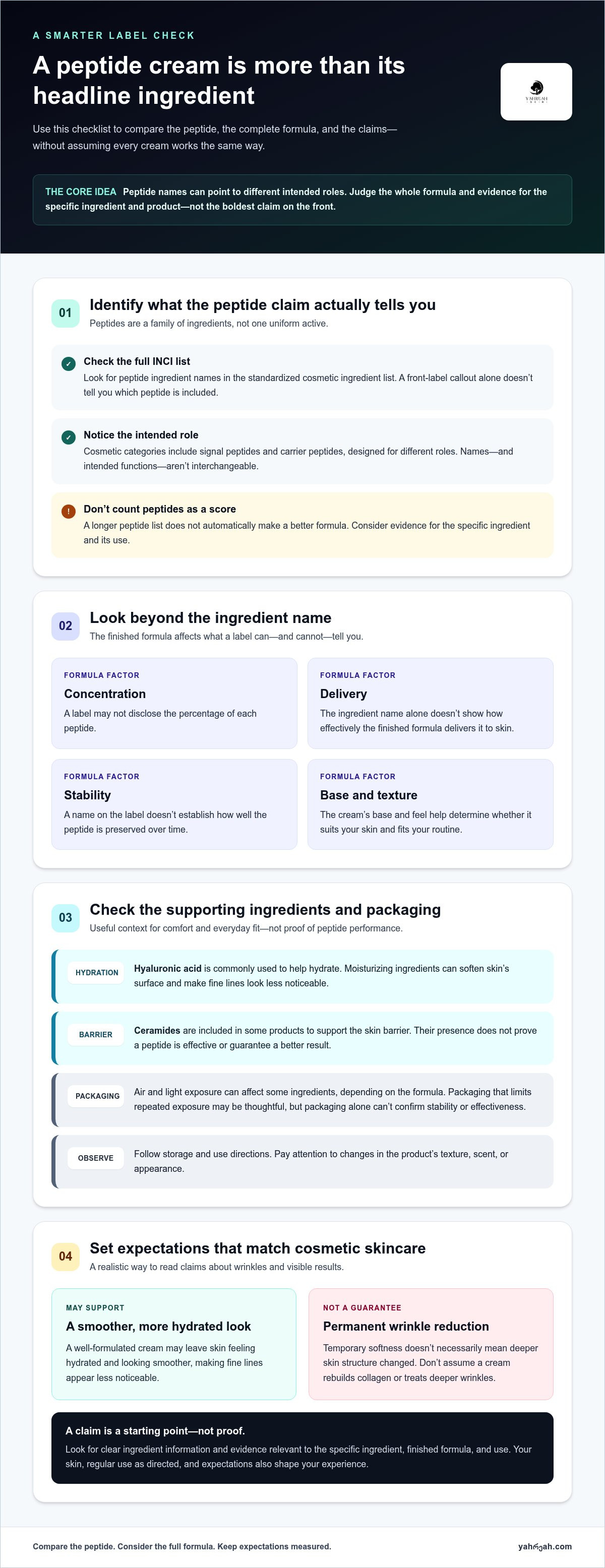
A thoughtful choice starts with your skin, not the biggest promise on the jar. Use this checklist to compare a peptide face cream for wrinkles with care and find a formula that feels at home in your routine.
Look beyond front-label claims. The INCI list names the ingredients, while directions explain how the product is meant to be used. Check for fragrance or other ingredients that don’t suit your sensitivities, and favor claims that describe the intended cosmetic benefit without promising dramatic change. “Clean,” “natural,” and “peptide” aren’t substitutes for assessing the complete formula.
Follow the product directions and fit the cream into your existing steps. A simple approach may be to cleanse, apply the product as directed, then use moisturizer or daytime sun protection as appropriate for your routine. Patch test first, and introduce just one new product at a time. That makes it easier to notice changes in comfort or irritation instead of guessing which new step caused them.
Don’t assume every formula should be used at the same frequency. Begin according to its label, avoid layering several unfamiliar active products at once, and adjust only in line with the directions or qualified advice. If irritation persists or you have a specific skin condition, seek guidance from a qualified medical professional.
Ethical considerations can be part of a considered purchase, too. Explore this cruelty-free skincare brand guide for more on weighing those values. For natural skincare grounded in clean ingredients and cruelty-free formulations, explore Yahreah Skin’s skincare.
A considered routine isn’t built around the most dramatic promise. It’s built around products that suit your skin, clear ingredient information, and habits you can maintain. As you weigh whether a peptide face cream for wrinkles belongs in your regimen, let comfort and formula transparency matter as much as the featured ingredient.
Yahreah Skin offers natural skincare and emphasizes clean ingredients and cruelty-free formulations. The brand also describes its manufacturing as FDA-registered and based in the USA. FDA registration should not be read as FDA approval of a cosmetic product or an endorsement of its effectiveness; assess each product by its own ingredient information and directions.
“Natural” and “clean” can describe a brand’s approach, but they don’t guarantee that a formula will suit every complexion or be irritation-free. Your skin has its own preferences. Read labels with care, consider ingredients you’ve reacted to before, and choose textures and routines that feel comfortable and practical. A calm, consistent approach gives you a clearer sense of what works for you than switching products in response to every new claim.
Give a new product room for thoughtful observation, not an assumed deadline. Notice how your skin feels and looks as you use the product according to its label, while remembering that results vary with the formula, your skin, and your routine. Hydration or a smoother feel may be easier to notice than a lasting change in the appearance of wrinkles. No cosmetic cream can promise the same outcome for everyone.
If irritation occurs, stop using the product. For a persistent reaction or a specific skin concern, seek advice from a qualified medical professional. A skincare routine should feel supportive, not like a test of endurance.
Choose with care, then give your routine consistency. Yahreah Skin’s natural skincare approach reflects an emphasis on clean ingredients and cruelty-free values, without asking you to rely on dramatic promises. Explore Yahreah Skin to learn more about its skincare approach and find options to consider as part of your personal-care ritual.
A peptide face cream for wrinkles is best judged by its complete formula, the evidence behind its claims, and how comfortably it fits your skin and routine. Peptides, retinoids, and hydrating ingredients play different roles, so choose according to your needs rather than expecting one ingredient to do everything. Read the label, introduce unfamiliar products thoughtfully, and keep expectations realistic.
Yahreah Skin’s natural skincare approach emphasizes clean ingredients and cruelty-free formulations. The brand states that its manufacturing is FDA-registered and based in the USA; this does not mean a cosmetic product is FDA-approved or endorsed for efficacy. Transparency and a considered routine can help make skincare feel more intentional and grounded.
Explore Yahreah Skin and discover a thoughtful approach to natural skincare. Let consistency, comfort, and care guide your next choice.
Some peptide creams may help skin look smoother or more hydrated, but results depend on the specific peptide, the complete formula, and your skin. A peptide face cream for wrinkles is a cosmetic product, not a guaranteed way to erase lines or change deeper skin structure. Look for clear product information and evidence relevant to the formula, and keep expectations measured. A moisturizer’s temporary plumping effect isn’t proof of lasting wrinkle reduction.
There isn’t one peptide that’s best for everyone, and different peptides have different intended cosmetic roles. Signal peptides, for example, are used in formulas targeting the appearance of firmness, while other peptide categories have different functions. Check the full ingredient list for the specific peptide names, and look for evidence connected to those ingredients and the product’s claims. A longer list of peptides doesn’t automatically mean stronger or more reliable results.
Peptide cream and retinol may both fit into a routine, but introduce them thoughtfully, especially if your skin is sensitive. Follow each product’s directions and avoid adding several unfamiliar active ingredients at once. If the peptide formula contains copper peptides, consider separating it from retinol rather than layering them in the same application, since copper may affect retinol stability. For persistent irritation, a skin condition, or questions about your circumstances, seek qualified medical advice.
There’s no reliable universal timeline. Hydration can make skin feel softer or look temporarily plumper soon after application, while claims about longer-term changes require evidence for the specific formula and consistent use. Your skin, routine, and the product itself all affect what you notice. Follow the label and observe comfort and appearance over time rather than expecting a promised deadline. Stop if irritation develops, and seek advice if a reaction persists.
Yes. A peptide cream may be well tolerated by some people, but any part of a formula, including fragrance or other ingredients, can trigger sensitivity. Check the complete ingredient list for known personal triggers and patch test before applying it more widely. Introduce the product gradually according to its directions, and avoid starting several new products together. If irritation occurs, stop use; consult a qualified medical professional if the reaction is persistent or concerning.
Either may work, depending on the product’s directions and how it fits your routine. Apply it after cleansing or other earlier steps if the label recommends that order, then follow with moisturizer or daytime sun protection as appropriate. There’s no universal schedule for all peptide formulas, so don’t assume more frequent use means better results. If you’re combining it with retinol or other active ingredients, introduce products carefully and follow their individual directions.
Check the full INCI ingredient list, directions, and whether the product clearly explains its cosmetic claims. Identify the peptide ingredients rather than relying on the word “peptide” on the front label, and consider texture, fragrance, and personal sensitivities. Supporting ingredients may suit your skin’s needs, but they don’t prove a peptide will work. Choose a formula you can use comfortably and consistently, then set realistic expectations for cosmetic results.


