

 USD
USD EUR
EUR
 AUD
AUD
 GBP
GBP
 JPY
JPY
 INR
INR
 MXN
MXN
 CAD
CAD
 JMD
JMD
Total: $0.00
Taxes and shipping calculated at checkout


Before choosing vitamin B12 supplements, ask whether you need one at all. Changes in energy or other symptoms can have many causes, so a supplement isn’t a substitute for understanding what may be behind them.
B12 supports important body functions, and many people get it from food. Diet, age, digestive conditions, surgery, and some medications may affect intake or absorption. Consider your own circumstances and discuss your B12 status with a healthcare professional rather than guessing at a dose.
This guide covers B12’s role and dietary sources, factors that may warrant closer attention, and differences between cyanocobalamin and methylcobalamin. It also explains how to compare supplement labels, including the form, amount per serving, and other ingredients, so you can make a more informed choice.
Vitamin B12, also called cobalamin, is an essential water-soluble nutrient. It helps the body make DNA and red blood cells and supports normal nervous system function. These roles are important, but they don’t mean a supplement will automatically boost energy or improve how someone feels. The National Institutes of Health Office of Dietary Supplements’ vitamin B12 fact sheet explains these functions and provides a useful overview.
B12 helps the body produce DNA, the genetic material cells use as they grow and divide. It also contributes to forming red blood cells, which carry oxygen through the body. When B12 intake or absorption is inadequate, these processes can be affected. Symptoms and their causes vary, so symptoms alone can’t confirm a deficiency.
B12 also contributes to normal nervous system function. It supports processes involved in maintaining nerve cells and the protective covering around nerves. These are essential roles, not a promise that taking B12 will treat tingling, tiredness, or another symptom. For a broader overview of the nutrient’s functions and forms, see this Vitamin B12 overview.
Meeting a nutrient need is different from taking more than the body needs. If someone already has adequate B12 status, vitamin b12 supplements aren’t guaranteed to increase energy. Unusual or persistent tiredness can have many explanations, so a supplement shouldn’t replace a thoughtful assessment of concerning symptoms.
For most people, food choices are a useful starting point. Naturally occurring B12 is found mainly in animal-derived foods, including fish, meat, poultry, eggs, milk, and other dairy products. Amounts vary, so eating one particular food doesn’t necessarily show whether your overall intake is adequate.
B12 isn’t generally present naturally in plant foods, but some plant-based foods are fortified with it. Examples include certain breakfast cereals and fortified nutritional yeast. Fortification varies by product, so check the nutrition information instead of assuming a food contains B12 because it’s plant-based or marketed as nourishing.
For people who avoid animal-derived foods, fortified foods and supplements can help account for this dietary gap. The right approach depends on a person’s eating pattern and circumstances. Check labels to distinguish naturally occurring B12 from added B12 and see what a product provides.
Certain dietary and health circumstances may make B12 intake or absorption more relevant, but belonging to a higher-risk group doesn’t confirm a deficiency. It’s a reason to consider diet, absorption, and personal health history, not to diagnose yourself or automatically start vitamin b12 supplements.
People who avoid animal-derived foods should pay particular attention to reliable B12 sources. A vegan diet contains no naturally occurring B12, so fortified foods or a supplement may be important sources. Vegetarians may also have limited intake, depending on which foods they eat. Consider whether B12 is consistently present in your diet rather than relying on a diet label alone.
Absorption can matter as much as intake. The NIH Vitamin B12 Fact Sheet identifies older adults and people with digestive conditions, including celiac disease and Crohn’s disease, as groups who may have difficulty absorbing B12. Some gastrointestinal surgeries can also affect absorption. Long-term use of certain medicines, including metformin and acid-reducing drugs such as proton pump inhibitors, may be relevant. Don’t stop or change a prescribed medication without medical guidance.
Life stage can shape nutritional needs, too. Pregnancy and breastfeeding have higher recommended B12 intakes than the standard adult recommendation. That doesn’t mean everyone who is pregnant or breastfeeding needs a separate supplement; dietary pattern and individual circumstances matter. People following a vegan or vegetarian diet during these stages can discuss reliable B12 sources with a healthcare professional.
Fatigue, weakness, and tingling are among the symptoms associated with low B12, but they can also have many other causes. Other possible signs may involve changes in balance, memory, or mood. Symptoms vary, and a list of signs can’t establish what’s causing them.
If symptoms persist, worsen, or concern you, seek professional assessment rather than relying on a supplement trial to identify the cause. A clinician can consider your symptoms alongside your diet, health history, and medications, then decide whether testing is appropriate. This helps distinguish a possible risk from evidence of a deficiency and can guide a suitable next step.
For general supplement choices, look for clear ingredient information and avoid relying on sweeping promises. Reading about clean supplement ingredients can complement careful label reading, but it doesn’t replace advice about an individual B12 concern.
Two names often appear on supplement labels: cyanocobalamin and methylcobalamin. Both provide vitamin B12, but they differ in structure and how the body processes them. A label calling one form “active” doesn’t show that it will work better for everyone. Compare what each form is, what the evidence can tell you, and how it fits your circumstances.
Cyanocobalamin is a manufactured form of B12 that the body converts into forms it can use. Methylcobalamin is a form the body uses in certain processes. Both are used in supplements, and available evidence doesn’t establish that methylcobalamin is universally superior. Harvard Health on Vitamin B12 offers further context on B12 and supplementation. An “active” label doesn’t replace consideration of your diet, health, or clinical needs.
| Form | Key distinction | Evidence caveat | Reader consideration |
|---|---|---|---|
| Cyanocobalamin | A manufactured form that the body converts into usable B12 forms. | It’s a commonly used form, but a supplement label alone can’t show what’s right for an individual. | Check the amount per serving and the full ingredient list. |
| Methylcobalamin | A form the body uses in certain processes. | Its “active” description doesn’t prove it provides better results for everyone. | Consider it alongside personal dietary and health context, not marketing language alone. |
The form name describes the ingredient; it isn’t an individualized recommendation. When comparing vitamin b12 supplements, check the form and serving amount, then consider why you’re taking one. If a clinician has identified a deficiency or suggested a particular approach, follow that guidance rather than a general claim that one form is best.
Tablets, capsules, liquids, and products designed to dissolve under the tongue offer different ways to take B12. They may suit different preferences, such as ease of swallowing or fitting a routine, but the format alone doesn’t establish faster absorption or better results. Weigh claims about enhanced absorption against credible evidence rather than assuming they’re true because a product says “sublingual” or “advanced.”
Consider whether you can use the format consistently, then check the label for the B12 form, amount per serving, directions, and other ingredients. Life stage can also shape broader nutrition needs. For example, pregnancy and breastfeeding call for attention to B12 intake as part of overall dietary planning. A format preference doesn’t replace that assessment. Choose a format that suits your needs, with professional guidance when appropriate.
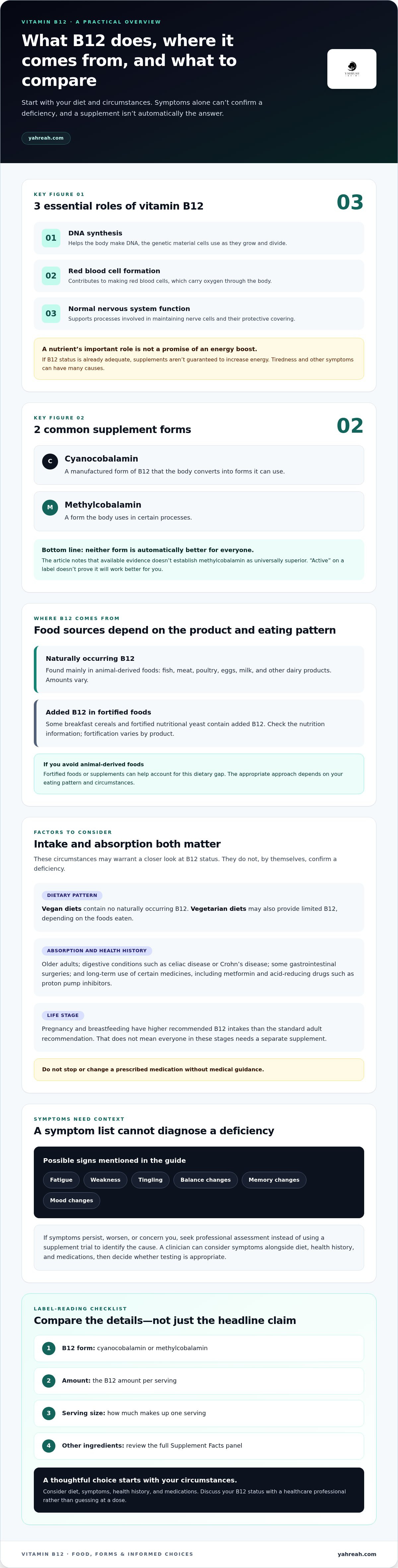
A supplement label tells you what a product contains, but it can’t determine whether you need it. Read it in a consistent order: check the serving size, find the amount of B12 per serving, identify the form, and review the other ingredients and directions. This makes it easier to compare vitamin b12 supplements by their contents instead of front-label promises.
Compare the amount per serving with your overall intake, not just the daily recommendation. A supplement serving may contain more than the recommended daily intake, but that number alone doesn’t show what an individual should take. Needs can depend on dietary pattern, absorption, health history, and other personal factors. Don’t choose a high-potency product simply because its number looks more impressive.
If you suspect a deficiency, have persistent unexplained symptoms, live with a health condition that could affect absorption, or take medication that may influence B12 status, discuss your situation with a healthcare professional or pharmacist. They can consider whether assessment or testing is appropriate. Bring the label or a clear photo of it, along with a list of medications and other supplements. Don’t stop prescribed treatment or change medication based on a supplement label.
Label reading also means looking beyond a single nutrient claim. Yahreah Skin emphasizes clean ingredients and cruelty-free formulations, values that encourage careful attention to ingredient transparency. They don’t establish that a specific B12 product offers a particular benefit. Choose with clarity, not pressure.
Explore Yahreah Skin supplements as part of a considered wellness routine.
A thoughtful B12 decision is a sequence, not a guess. Start with your dietary pattern and health context. If you have persistent concerns, seek appropriate assessment before deciding whether a supplement belongs in your routine. This can help distinguish a possible risk from a confirmed need and keep your product choice grounded in your circumstances.
This approach is especially useful if you’re considering vitamin b12 supplements because of fatigue, tingling, or another unexplained change. Instead of choosing a form or amount based on a symptom or persuasive label claim, bring the product information to your appointment. A healthcare professional or pharmacist can review it in light of your health circumstances and other products or medicines you use. Don’t stop prescribed treatment or change medication without professional guidance.
Careful supplement decisions go beyond the nutrient name. Yahreah Skin emphasizes clean ingredients and cruelty-free formulations, values that align with reading ingredient lists closely and seeking transparent product information. These principles can inform how you evaluate a routine, but they don’t establish that a particular supplement is right for you or make a B12-specific health claim.
Yahreah Skin’s products are made in FDA-registered manufacturing facilities in the USA. Facility registration does not mean the FDA has approved or endorsed a product. When assessing supplement information, distinguish what the label states from what it proves, and rely on qualified professional guidance for questions about your personal needs.
Wellness can be considered and calm. Once your B12 questions have been addressed with appropriate care, explore Yahreah’s wellness philosophy for a broader perspective on mindful product choices.
Your next step doesn’t need to be a quick purchase. Let your dietary habits and personal health context guide the questions you bring to a healthcare professional, then use that guidance to decide whether vitamin b12 supplements have a place in your routine. A considered choice is more meaningful than choosing based on a trend or a promise of instant energy.
Apply the same care when evaluating wellness brands. Yahreah emphasizes clean ingredients and cruelty-free formulations, and its products are made in FDA-registered facilities in the USA. Facility registration is not FDA approval or endorsement, so keep label details and evidence in view as you explore your options.
For a broader look at a thoughtful approach to wellness, explore Yahreah’s mindful approach to wellness. Let curiosity lead, take your health questions one step at a time, and choose with confidence.
Vitamin B12 supplements are used to help prevent or address inadequate B12 intake and may be recommended when a person has difficulty absorbing the nutrient. Someone whose diet excludes animal foods and doesn’t regularly include fortified sources may need a reliable alternative. Supplements can also be part of care when low B12 is identified. They aren’t a general-purpose energy booster, and persistent fatigue deserves attention to its possible causes.
No form has been shown to be the best choice for everyone. Methylcobalamin is a form the body uses in certain processes; cyanocobalamin is a manufactured form that the body converts into usable B12. A product marketed as “active” isn’t automatically more effective for your needs. When comparing labels, consider the form, amount per serving, ingredients, and any guidance from a healthcare professional.
Yes, if your eating pattern consistently includes reliable B12 sources, such as appropriately fortified foods. Naturally occurring B12 is generally found in animal-derived foods, so unfortified vegetables, grains, beans, and fruit aren’t dependable sources. Check product labels for B12 and serving information, since fortification varies. If you rarely eat fortified foods, discuss how to meet your needs with a healthcare professional or dietitian familiar with plant-based nutrition.
For adults aged 19 and older, the recommended dietary allowance is 2.4 micrograms (mcg) daily. The recommendation is 2.6 mcg during pregnancy and 2.8 mcg while breastfeeding. These figures describe recommended total daily intake, not a personal supplement dose. Food and fortified products contribute, too. If you have a condition or circumstance that may affect absorption, a clinician can help interpret the recommendation for your situation.
If your B12 status is already adequate, taking more isn’t known to provide a reliable energy or wellness boost. The body absorbs only a portion of large oral doses, and an unnecessary supplement can add cost or ingredients you don’t need. B12 has no established tolerable upper intake level, but that doesn’t make every dose or product suitable for everyone. Ask a healthcare professional if you’re unsure whether supplementation is warranted.
Some medicines can affect B12 status by reducing absorption rather than by directly interacting with a supplement. Long-term metformin use and acid-reducing medicines, including proton pump inhibitors, are examples discussed by the NIH Vitamin B12 Fact Sheet. If you take these or other ongoing medication, ask a pharmacist or clinician whether your B12 intake or status needs review. Don’t stop or adjust prescribed medicine on your own.


