

 USD
 EUR
 AUD
 GBP
 JPY
 INR
 MXN
 CAD
 JMD
Total: $0.00
Taxes and shipping calculated at checkout


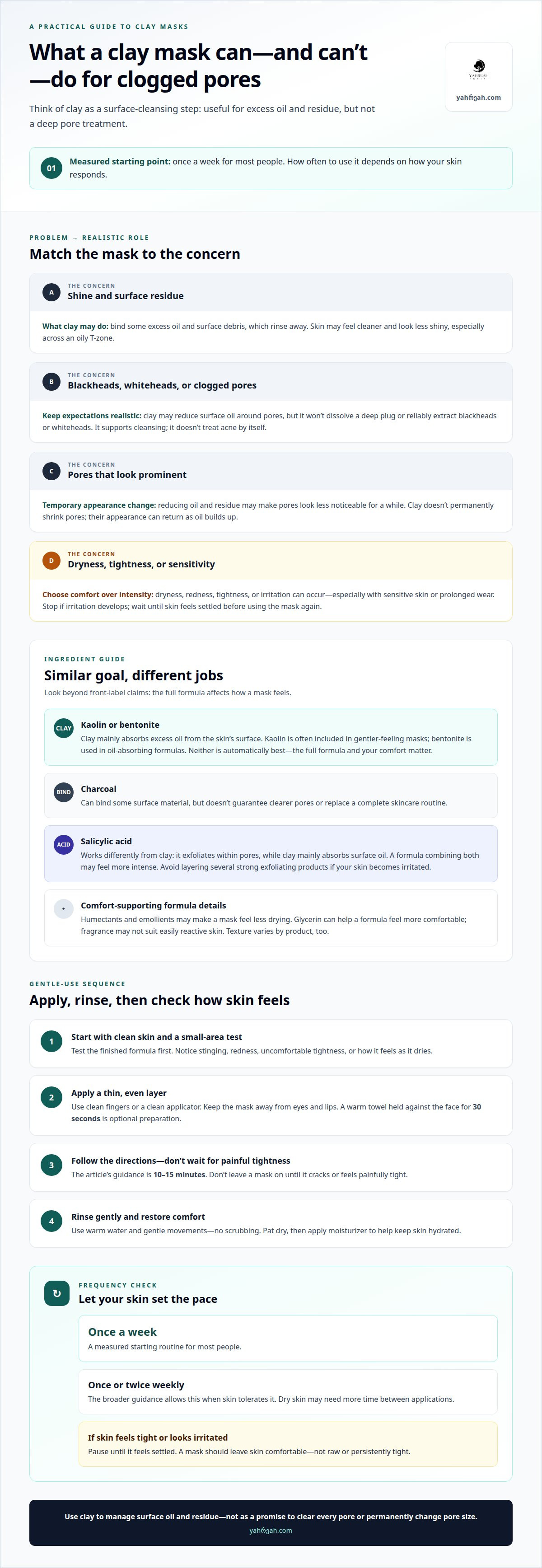
A clay mask can absorb excess oil and help lift surface residue, making a clarifying clay face mask for clogged pores a considered option for skin that feels congested or shiny. For most people, once a week is a measured starting point. The right frequency depends on how your skin responds.
If you’re hoping for a fresher-looking complexion, it’s understandable to reach for a mask that feels deeply cleansing. But a comfortable, balanced routine matters more than choosing the strongest formula, especially if your skin is dry or sensitive.
Learn how clay masks work, what to look for in the ingredients, and how to apply and rinse one gently. Then use the differences between oily, dry, sensitive, and combination skin to find an approach that feels right for you.
A clay mask can absorb some surface oil and lift residue as you rinse, so skin may feel cleaner and look less shiny. A clarifying clay face mask for clogged pores can support your cleansing routine, but it won’t remove every blockage or treat acne by itself.
How do clay face masks help clear clogged pores? Clay binds to excess oil and surface debris, which rinsing carries away. This can make congestion less noticeable, especially across an oily T-zone, but it won’t dissolve a plug deep inside a pore.
Blackheads form when a pore’s contents meet air; whiteheads remain covered by skin. A clay mask may reduce surface oil around both, but it doesn’t reliably extract either type. Salicylic acid can exfoliate inside pores, so a mask containing it works differently from clay alone. Avoid combining several strong exfoliating products in one routine if your skin becomes irritated.
Clay doesn’t permanently shrink pores. By reducing oil and residue around them, it may temporarily make pores look less prominent. Their appearance can return as oil builds up again. Genetics, oil production, and skin condition all influence how visible pores look.
Test a mask on a small area first, then assess how it feels and looks on your skin. Notice whether it spreads smoothly or pulls as it dries, and whether your skin feels comfortable after rinsing. Tightness or stinging, for example, can signal that the formula or wear time doesn’t suit sensitive skin. A soothing moisturizer can help restore comfort afterward.
What are the risks and side effects of clay face masks? Dryness, tightness, redness, or irritation can occur, particularly with sensitive skin or prolonged wear. The U.S. Environmental Protection Agency notes clay particles may expose skin to toxic elements, including heavy metals, through dermal absorption. Choose products made for facial use, and stop if irritation develops.
For clogged or enlarged pores, think of clay as a surface-cleansing step, not a permanent pore treatment. If you’re prone to blackheads, keep the rest of your routine gentle and observe how your skin looks after each use. A mask should leave skin comfortable, not raw or persistently tight.
How to use a clay face mask without irritating or drying out skin? Start with clean skin, apply an even, thin layer, and follow the product’s directions. Grant recommends leaving a clay mask on for 10 to 15 minutes, then gently rinsing with warm water. Don’t wait for it to crack or feel painfully tight.
Texture offers a practical clue to how a mask may feel. A creamy formula may spread more easily than a thick paste, while a powder mask needs mixing before use. Kaolin and bentonite are common mask ingredients, but texture and the full formula vary by product. Before applying a mask across your face, test a small area and notice whether it feels comfortable as it starts to dry.
For a simple routine, cleanse first and apply the mask with clean fingers or a clean applicator. Keep it away from your eyes and lips, where skin can be delicate. A warm towel held against the face for 30 seconds is an optional preparation step. Rinse with warm water using gentle movements, rather than scrubbing the surface. Pat dry, then apply moisturizer to help keep skin hydrated.
Frequency matters as much as timing. For most people, using a clay mask once a week is a measured routine; the broader guidance allows once or twice weekly when skin tolerates it. People with dry skin may want to leave more time between mask applications and pay attention to how their skin responds. If your face feels tight or looks irritated after masking, wait until it feels settled before using the product again. Let the mask support your routine, not dominate it.
Which is better for clogged pores: kaolin clay or bentonite clay? Neither is automatically best; choose based on your skin’s comfort and the complete formula. Kaolin is often included in gentler-feeling masks, while bentonite is used in oil-absorbing formulas.
Read the ingredient list beyond the word “clay.” A mask might combine kaolin or bentonite with humectants and emollients, which can make its finish feel less drying. For example, glycerin can help a formula feel more comfortable, while fragrance may not suit easily reactive skin. Match the formula to your needs, not just its front-label claims.
Charcoal is another ingredient used in cleansing masks. It can bind some surface material, but it doesn’t guarantee clearer pores or replace a complete skincare routine. Check its place in the ingredient list, then consider whether the mask includes ingredients that support a smooth, comfortable feel.
Salicylic acid works differently from clay: it exfoliates within pores, while clay mainly absorbs excess oil from the skin’s surface. A formula combining both may feel more intense than a clay-only mask. If your routine already includes an exfoliating product, avoid layering several active formulas at once.
For an affordable option in the US, compare simple clay formulas by their full ingredient lists and cost per application. A basic mask with kaolin or bentonite may suit your cleansing goal without extra ingredients you don’t need. Don’t choose based on “detox” language alone; focus on the ingredients and texture you prefer.
Before using a new mask across your face, test it on a small area and observe your skin’s response. Note any stinging, redness, or uncomfortable tightness, especially if your skin is sensitive. This helps you assess the finished formula, since two masks with the same clay can feel different because of their other ingredients.
Choose a clay mask based on your skin’s oiliness and comfort, not the word “purifying” alone. A gentle formula that leaves skin comfortable is a better match than one that makes it feel stripped. Use this guide to adjust the application area and frequency to your skin type.
For oily skin, apply a thin layer to the forehead, nose, and chin, where shine tends to collect. The guidance for oily skin is 2 times a week; extremely oily, acne-prone skin may use a clay mask twice a week. Start with the lower frequency, and pay attention to whether dryness or tightness develops between uses.
Dry or sensitive skin needs a lighter touch. For these skin types, the recommendation is to use a mask once every two weeks. Apply it only to areas that feel congested, rather than coating cheeks that already feel dry. After rinsing, use a moisturizer; a formula with hyaluronic acid can help skin feel hydrated.
Combination skin can benefit from a targeted approach: apply the mask to oilier areas and leave drier zones bare. For example, treat the T-zone while skipping flaky cheeks. If breakouts appear in one area, avoid applying a stronger mask across your whole face to address just a few spots. Keep the rest of your routine gentle.
For balanced skin, begin with one masking session a week and observe how your face feels afterward. Treat this as a starting point, not a goal to increase automatically. Redness, lingering tightness, or new discomfort means the formula or frequency may be too much. If your skin is sensitive, patch-test the product before facial use.
Skin can shift with weather, cleansing habits, and other products in your routine. Reassess the mask’s fit when dry patches or excess shine change. For a gentle routine beyond masking, explore natural skincare options and choose products that complement your skin’s current needs.
Yahreah Skin offers natural skincare products for readers building a considered routine beyond occasional masking. If you’re choosing a clay mask for your skin type, take a broader approach: keep everyday skincare simple, notice how your skin responds, and avoid expecting one product to address every concern.
Yahreah Skin also offers women’s health supplements, men’s health supplements, and premium supplements. These are separate parts of its range, while natural skincare products are the closest fit for readers exploring topical care. Yahreah Skin emphasizes clean ingredients, cruelty-free formulations, and manufacturing in FDA-registered facilities in the USA.
For a calm next step, contact Yahreah Skin to explore its natural skincare products and other offerings.
Your next skincare decision can begin with a simple intention: what would make your routine feel more supportive, rather than more demanding? A clarifying clay face mask for clogged pores may have a place if it suits your skin and the way you want to care for it. Set a realistic goal, such as choosing products you can use comfortably and consistently.
As your routine evolves, treat each purchase as a deliberate choice, not a response to every new concern. Consider what you already use, which textures you enjoy, and which steps feel easy to maintain. This can help you avoid collecting products that compete for attention, while leaving room to refine your choices as your preferences change.
If you’d like to explore skincare options for a thoughtful routine, contact Yahreah Skin for advice. Build a ritual that feels considered, calm, and genuinely yours.
A clay mask can temporarily reduce surface oil and leave skin feeling fresher after rinsing. For example, if your forehead looks shiny by midday, a mask may help absorb some excess oil there. It won’t permanently change pore size or replace other skincare steps. Judge whether it suits you by how your skin feels afterward, not only by how matte it looks immediately.
Clogged pores can develop when oil, shed skin cells, and other residue collect at a pore opening. Makeup left on overnight, for instance, may add to surface buildup, while naturally oily areas can feel congested more often. A gentle cleansing routine helps remove surface residue; avoid trying to clear congestion by squeezing or scrubbing, which can irritate skin.
Kaolin or bentonite provides the clay component, while salicylic acid can exfoliate within pores. Charcoal is another ingredient used in cleansing masks, though its presence alone doesn’t show how a formula will suit you. Compare the full ingredient list: a mask with several active ingredients may feel different from a simpler clay formula, especially alongside your existing exfoliants.
Once a week is a sensible starting point for most people. Guidance for oily skin allows use twice a week, while dry or sensitive skin guidance recommends once every two weeks. Consider your routine, too: if another product already leaves your skin dry or tight, leave more time between masks instead of adding another application automatically.
Leave a clay mask on for 10 to 15 minutes, then rinse gently with warm water. Follow the directions on the specific product, since formulas can differ. Don’t wait for a mask to crack or become uncomfortably tight. If discomfort starts before the suggested time ends, rinse it off and avoid repeating that application pattern.
Clay masks may suit some people, but skin type and formula matter. If your skin is dry or sensitive, use a mask less often and apply it only to areas that feel oily. Acne-prone skin may tolerate more frequent masking, but a clay mask isn’t a substitute for acne treatment. Stop using it if you notice persistent redness, stinging, or irritation.


