

 USD
 EUR
 AUD
 GBP
 JPY
 INR
 MXN
 CAD
 JMD
Total: $0.00
Taxes and shipping calculated at checkout


Organic doesn’t automatically mean a reliable source of vitamin B12. Plant-based B-complex vitamins with active B12 can complement a plant-focused diet, and fortified nutritional yeast offers a food-based option: a 2-tablespoon serving provides 363% of the Daily Value for B12. Unfortified organic produce, by contrast, shouldn’t be relied on to supply it.
Choosing plant foods is a thoughtful way to nourish yourself, but B12 is one nutrient that calls for special attention when animal products are off the menu. This guide explains how fortified nutritional yeast can contribute B12, why organic produce isn’t a dependable source, and how active B12 forms and recommended intake fit into the bigger picture. You’ll also see how other plant foods provide B vitamins such as folate and pantothenic acid, so you can make informed choices with greater confidence.
Organic produce isn’t a dependable way to meet vitamin B12 needs. Soil conditions can affect what appears in a crop, but measured B12-like compounds don’t establish reliable human B12 nutrition. A study measured B12 analogues in soybeans and spinach grown with different soil treatments. These results show variability, not a dependable dietary source.
Soybeans grown with nothing added to the soil contained 1.6 ng/g of B12 analogues. With dry cow manure added, the level was 2.9 ng/g. Spinach showed 6.9 ng/g without additions and 17.8 ng/g with manure. These are analogue levels, not proof that the plants provide usable vitamin B12. Organic status alone doesn’t turn variable soil compounds into a reliable B12 source.
Seaweed results also call for care. A nori trial included 24 vegetarians and 6 vegans and lasted 4 weeks. In a study of raw P. tenera, urinary MMA increased by 5%, a result that wasn’t statistically significant. Urinary MMA is a marker considered in assessing B12 status, so this result didn’t establish reliable benefit.
Preparation matters, too. In a study of dried P. tenera, urinary MMA increased by 77% after participants consumed the seaweed. Researchers found that 65% of its measured B12 was analogue. The contrast with the raw-seaweed result shows why a reported B12-like amount alone cannot confirm dependable nutrition.
Uncleaned organic produce lacks reliable evidence as a human B12 source. For a plant-based diet, don’t count on organic vegetables, soil-grown crops, or seaweed alone to supply B12. Check whether foods are fortified, and consider a suitable B12 supplement if your diet excludes animal foods. Folate-rich spinach and legumes remain valuable foods, but they don’t replace a reliable B12 source.
Supplement labels may list several forms of vitamin B12, but the names describe different chemical forms, not a ranking of quality. Methylcobalamin and adenosylcobalamin are active forms of B12, while hydroxocobalamin and cyanocobalamin become active after conversion to those forms, according to the National Institutes of Health Office of Dietary Supplements (12). This distinction helps decode labels without assuming that one form suits everyone.
Methylcobalamin and adenosylcobalamin are coenzyme forms used in the body. A product may contain either one, or both, alongside other B vitamins in a B-complex formula. Their presence tells you which B12 forms the supplement provides. It doesn’t, by itself, establish the product’s dose, suitability, or overall quality.
Hydroxocobalamin and cyanocobalamin are also used in supplements, although the body converts them into active forms. A label listing cyanocobalamin names a form that requires conversion, rather than an active form already present in the capsule. Hydroxocobalamin shares this distinction. Understanding whether a form requires conversion is the key difference.
When comparing products, read the full ingredient panel rather than relying on phrases such as “active B12” on the front label. Look for the specific form name, then review the amount and serving directions. In a plant-based B-complex, also examine the other listed B vitamins separately. The B12 form alone doesn’t tell you whether the complete formula matches your needs.
Form and source are separate questions. A B12 form’s name doesn’t establish whether the finished supplement is vegan; the capsule and other ingredients matter too. For a wider perspective on mindful wellness choices, consider how supplement decisions fit with your overall routine. Clear label reading makes the comparison more grounded and intentional.
Nutritional yeast is commonly fortified with vitamin B12, which is challenging to obtain from animal-free foods. A homocysteine level closer to 6-8 µmol/l is safer than levels reported in an Aphanizomenon flos-aquae supplementation study.
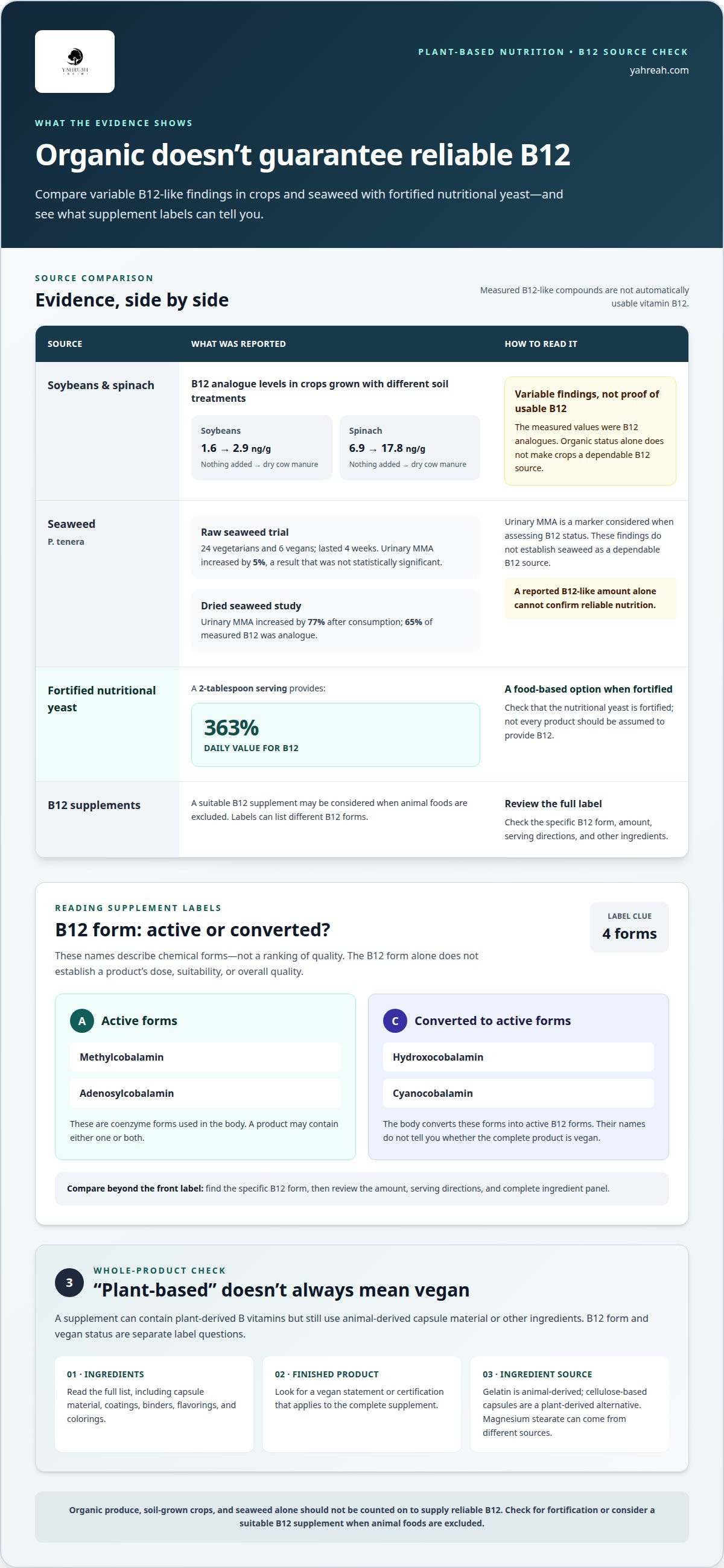
“Plant-based” on a B-complex label doesn’t automatically mean every ingredient is vegan. The phrase may describe the formula’s positioning, while capsules, coatings, and carriers have their own ingredients. For example, a supplement may contain plant-derived B vitamins but use a gelatin capsule. Read the full ingredient list, not just the product name or front label.
Start with the capsule shell. Gelatin is animal-derived, while cellulose-based capsules are a plant-derived alternative. Tablets also contain binders and coatings, so review those ingredients along with the B vitamins. A vegan claim should apply to the complete finished product, not only the vitamin blend inside.
Some ingredient names need closer attention. Magnesium stearate, for example, can come from different sources, so its name alone doesn’t show whether it is vegan. The same applies to flavorings, colorings, and processing aids listed in a formula. Look for a clear vegan statement or certification that covers the finished supplement.
Vitamin B12’s form and a supplement’s vegan status are separate label questions. Methylcobalamin, adenosylcobalamin, hydroxocobalamin, or cyanocobalamin identifies the B12 form, but doesn’t tell you whether the capsule or other ingredients are animal-free. Check both the active ingredient panel and the “other ingredients” list before choosing.
A practical label review can follow three checks:
These details matter when choosing a vegan supplement, since a single animal-derived capsule ingredient can affect whether the complete product fits your needs. Clear wording and a complete label make the choice easier to assess. Evaluate the whole product, not just its B vitamins.
Daily needs differ across B vitamins and life stages, so a B-complex label isn’t one universal target. For vitamin B12, the recommended amount for people aged 14 years and older is 2.4 micrograms daily. Pregnancy and lactation have separate amounts. Folate needs also change during pregnancy, making life stage important when comparing formulas.
These reference amounts help you read a supplement panel, but they don’t mean every person needs the same formula. Compare the amount per serving with your needs, then account for fortified foods or other supplements in your routine. A B-complex can combine several nutrients, so review each line rather than judging the product by its B12 amount alone.
Vitamin B12 has no established tolerable upper intake level. That doesn’t make every dose interchangeable: an oral tablet dose of up to 1000 micrograms per day is generally considered safe for treating a deficiency. This treatment amount is different from the daily recommended intake. Keep that distinction clear when interpreting a high-dose supplement label.
For a B-complex, check the serving size and amount of each nutrient, especially if another supplement or fortified food already contributes B vitamins. Pregnancy and lactation are examples of life stages with distinct B12 and folate reference amounts. A label comparison is most useful when you consider both the nutrient and your stage of life.
Review supplement options for your wellness routine with these daily reference amounts in mind.
Food can contribute meaningfully to these daily values. A 1-cup serving of Cheerios provides 79% of the Daily Value for vitamin B12, while a 1-cup serving of fortified Wheaties provides 167% of the Daily Value for vitamin B12. These examples show why it helps to include fortified foods when considering the amount supplied by a supplement.
For folate, a half-cup cooked serving of lentils provides 45% of the Daily Value, and a half-cup cooked serving of spinach provides 39%. A 1/2-cup cooked serving of edamame provides 60% of the Daily Value for folate. One ounce of sunflower seeds provides 40% of the Daily Value for pantothenic acid.
Yahreah Skin offers Women's Health Supplements for readers considering supplements as part of a thoughtful wellness routine. Use what you’ve learned about B-vitamin forms and daily reference amounts to compare labels and choose products that suit your priorities. Yahreah Skin also offers Men's Health Supplements, Premium Supplements, and Natural Skincare Products, supporting a broader approach to personal care without overstating what any one product can do.
If you’re ready to explore the available options, visit yahreah.com.
Let your next step reflect your diet, routine, and priorities, rather than a label’s most prominent claim. When comparing plant-based B-complex vitamins with active B12, look for a formula that fits your needs and your approach to ingredient choices. Build a routine thoughtfully, with habits you can sustain.
Yahreah Skin offers options across women’s and men’s health supplements, as well as premium supplements. As you explore plant-based B-complex vitamins with active B12, consider how a supplement fits alongside the other choices in your wellness routine.
Explore Yahreah Skin’s offerings and take a thoughtful next step toward caring for yourself.
The best option is one that fits your dietary needs and works with your existing supplements. Compare the full formula, serving directions, and amounts per serving instead of relying on a “best” label alone. For example, if you already take a multivitamin, review its B-vitamin contents before adding a B-complex, so you can avoid unintentionally doubling up. Choose a formula with clear ingredients and directions.
Methylcobalamin and adenosylcobalamin are active forms, while cyanocobalamin is converted into an active form. This distinction identifies the forms but does not establish that active forms are superior.
Vitamin B12 has no established upper intake level, and an oral dose of up to 1000 micrograms per day is generally considered safe for treating a deficiency. The material notes evidence suggesting supplements of 25 micrograms per day or higher may increase fracture risk, but gives no medication-interaction details.
People whose diets exclude animal foods should check for fortified foods and consider a suitable B12 supplement, since organic produce and seaweed alone are not dependable sources. The material does not provide a recommendation about checking blood levels first.


